

Writing is just one part of creating high-quality content. The foundation of great content starts with thorough research. Gaining expertise in content research can help you increase your blog’s reputation, raise its SEO rankings, and communicate more effectively with the readers, regardless of your level of experience as a blogger or content marketer.
But how much time should you actually spend on research? What are the most effective ways to identify the appropriate keywords, subtopics, and information for your content?
In this guide, we’ll explore seven practical strategies to help you master content research. This article covers all you need to know, from using Google’s Keyword Planner and SEMrush to investigating Google’s data-driven resources, PAA box, and more.
What is Content Research?
Content research is the process of gathering relevant data, keywords, and insights to create valuable and optimized content. It entails determining popular subjects, researching rivals, and comprehending audience demands in order to create interesting content that ranks well on search engines.
In addition to increasing SEO visibility, a well-researched blog increases audience credibility and trust. By using content research, marketers and bloggers can match their content strategy to what their target audience actually wants to read.
Why is Content Research Important?
Successful blogs are built on a foundation of thorough content research. It helps you stay ahead in the highly competitive digital market by assuring that your content is accurate, pertinent, and valuable to your audience.
- Enhances Content Quality: Provides accurate, insightful, and well-structured information.
- Enhances SEO Performance: Assists in identifying the appropriate keywords and search intent to achieve a higher ranking.
- Increases Engagement: Provides content that meets the expectations of the audience.
- Saves Editing Time: Fewer rewrites and revisions are required.
- Boosts Content Authority: This makes your blog a trustworthy and knowledgeable source.
You can write blogs that increase traffic, hold readers’ attention, and develop authority in your niche by recognising the value of content research.
How Long Should You Spend Researching?
Let’s discuss time management in content research before getting into the tips section.
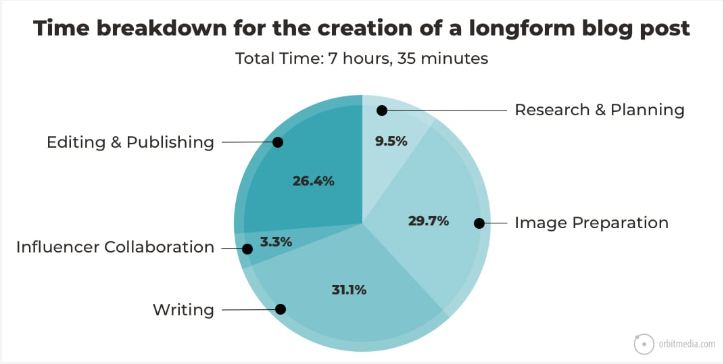
According to data from Orbit Media, bloggers only devote 9.5% of their time on planning and research. Writing, editing, and image preparation take up most of their time.
But here’s the key takeaway:
- The best-performing content is supported by thorough and in-depth research.
- Well-researched blogs tend to rank higher on Google and offer visitors more value.
- You can save hours on revisions and rewrites by investing more time in your research.
As content strategist Kaleigh Moore puts it, thorough research is crucial:
“Learn to research well and you’ve won half the battle with writing quality long-form pieces.”
Let’s now discuss the most effective methods for carrying out content research.
7 Actionable Tips to Master Your Content Research
1. Research Blog Topics Using Google Keyword Planner & SEMrush
First things first – choose the appropriate focus keyword for your blog.
To identify keywords that strike a balance between search volume and competitiveness, use SEMrush’s Keyword Magic Tool or Google Keyword Planner.
Here’s how to do it with Google Keyword Planner:
By using a tool called “Google Keyword Planner.” Although the tool contains the word “keyword,” it is a great resource for topic research.
To broaden the breadth of your blog, look up your overall topic, either by itself or in conjunction with related terms. Consider keywords as subjects to research rather than as restrictive phrases. For example, to obtain relevant ideas when writing about newsletters, search for “email list” in Google Keyword Planner.
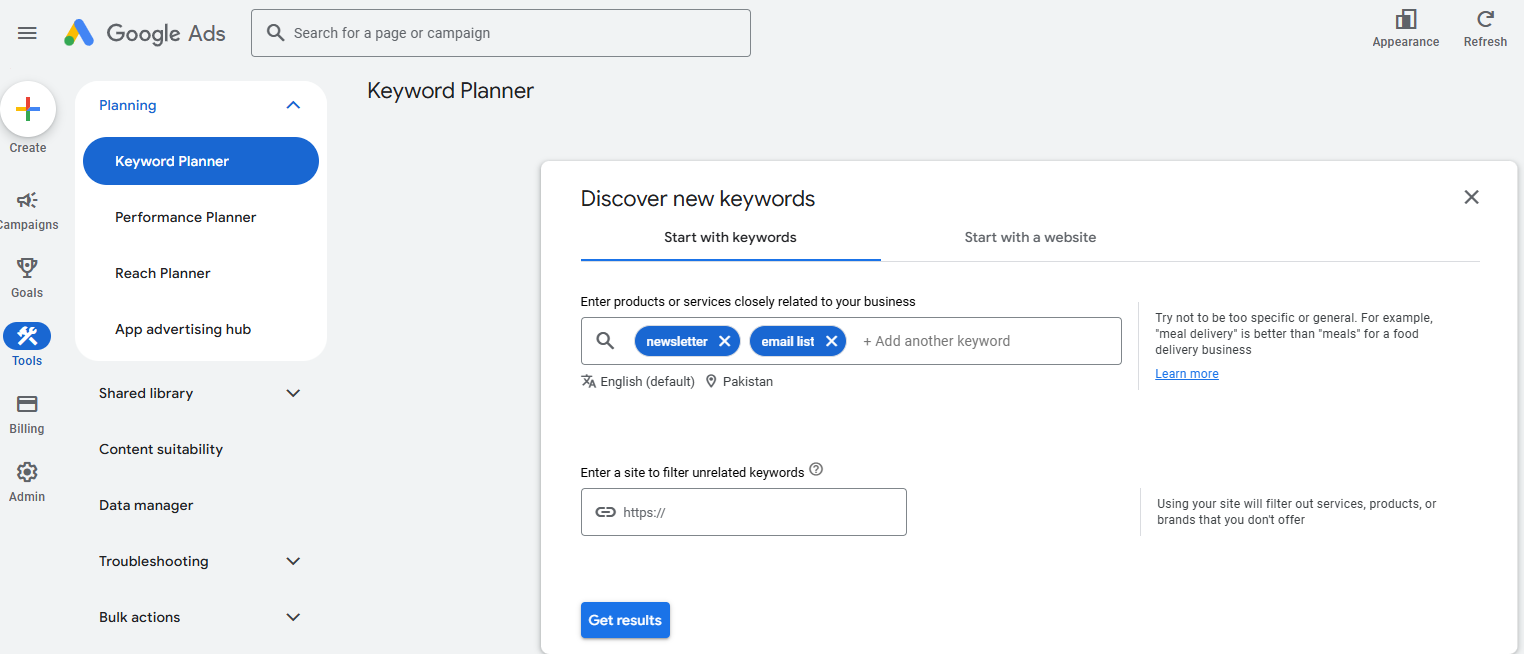
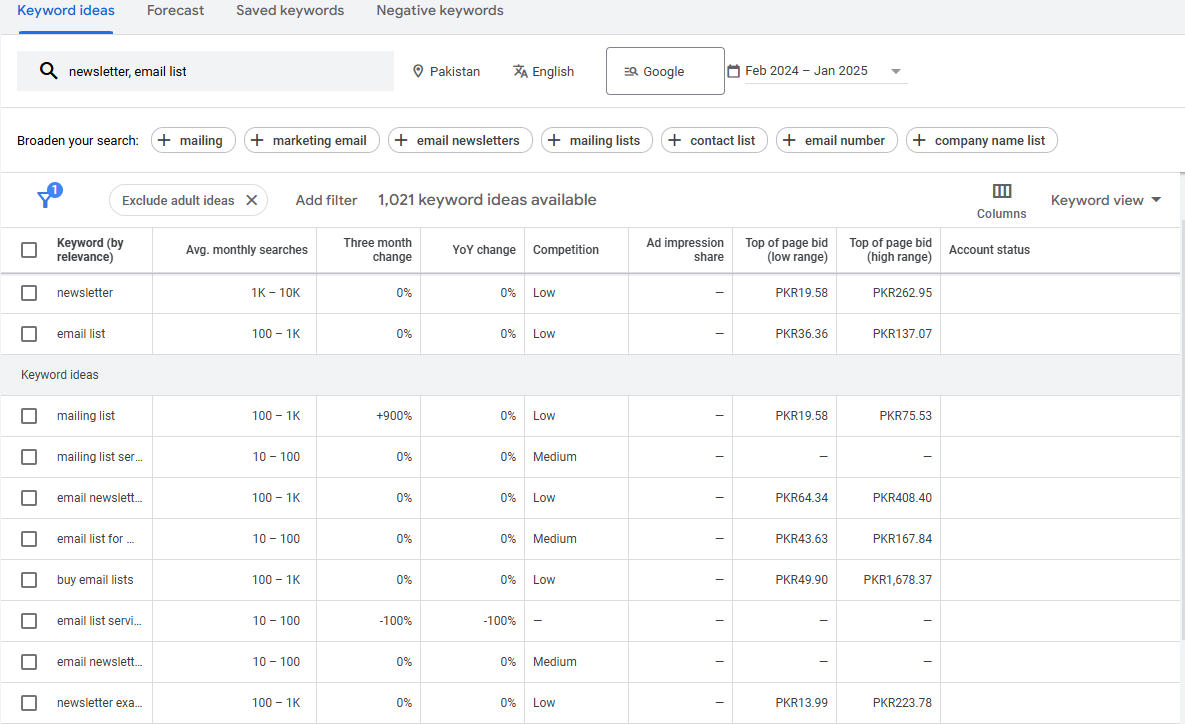
After that, examine each keyword topic to determine which ones are appropriate for your blog.
Watch this video to learn how to use the Google Keyword Planner tool for topic research: https://www.youtube.com/watch?v=gLFpSj_zf5s
Here’s how to use SEMrush:
Go to SEMrush’s Keyword Magic Tool

Type in your seed keyword (e.g., remote work tips). After selecting your target location, click “Search.”
It only takes seconds for Semrush to produce truckloads of potential focus keyword ideas for your blog post.
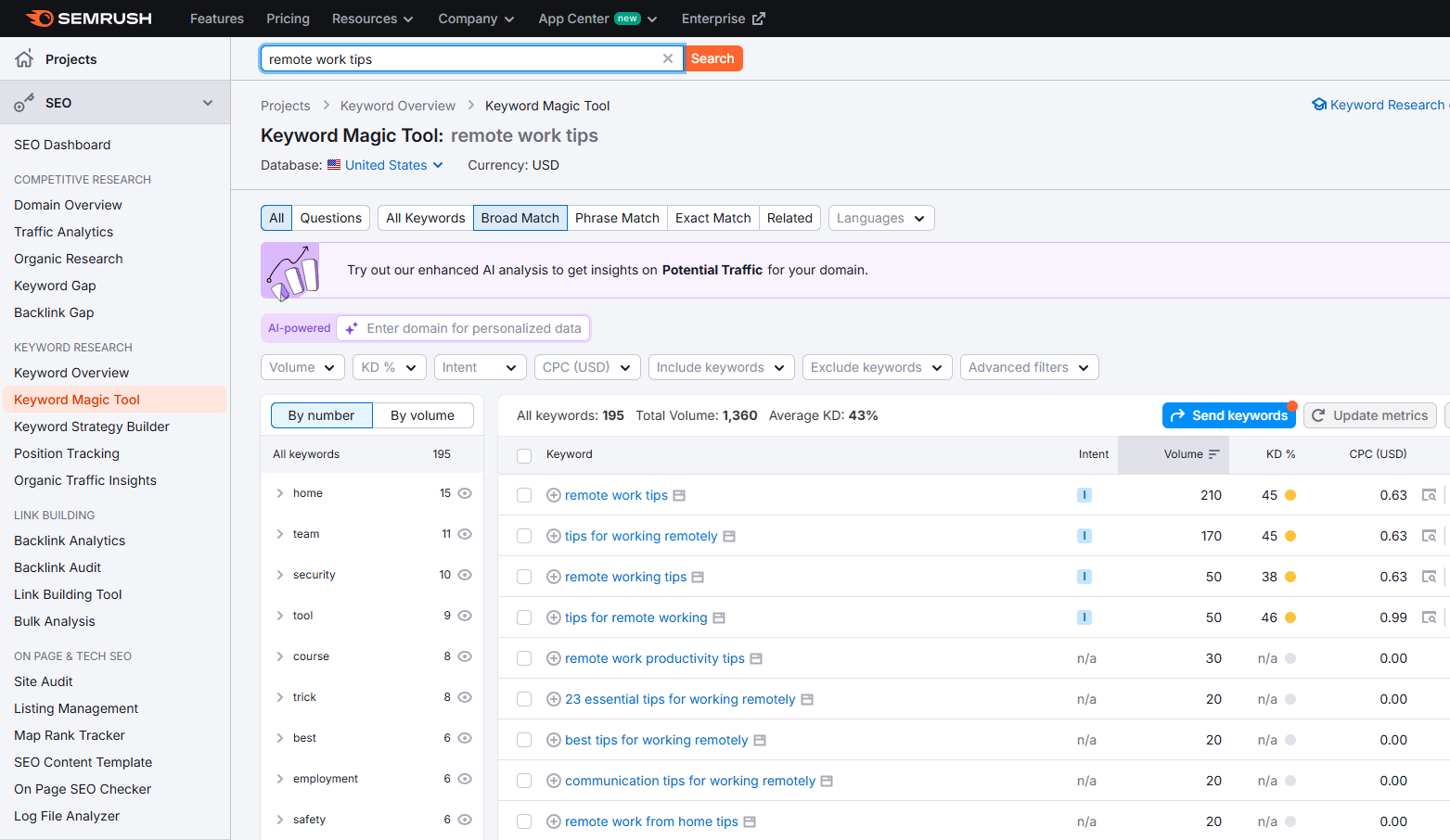
Look through hundreds of keyword suggestions along with search volume, competition level, and difficulty score. Choose a high-volume, low-competition keyword for your blog.
Naturally, picking the right focus keyword improves your chances of getting higher rankings in search engines.
2. Choose Subtopics & Related LSI Keywords
Secondary keywords aid in expanding your organic reach and identifying other subtopics in addition to focus keywords.
How to find them?
- In SEMrush’s Keyword Magic Tool list, click on the keyword of your choice.
- Go to Keyword Overview > Keyword Ideas.
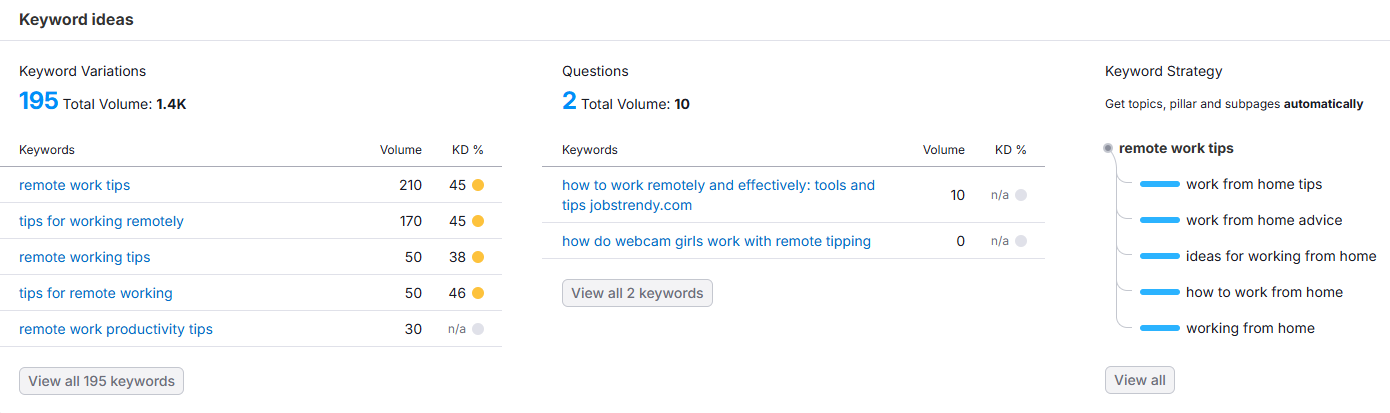
- Click a secondary keyword to reveal even more related search terms. This brings up another keyword overview report with even more related keywords for your blog.
- Alternatively, just click ‘View all keywords’ at the bottom of the keyword ideas list to generate a fresh batch of secondary keywords for your blog post.
Example: If your focus keyword is “remote work tips”, secondary keywords could be:
- Best apps for remote work
- Remote work vs. office work productivity
- How to manage remote teams
3. Analyze Search Intent Using Google
Not every keyword has the same intent. Before choosing a keyword, use Google Search to examine a keyword’s intent.
- Search your focus term on Google Search Bar.
- Check the top ten results to see if they are news stories, product pages, videos or guides.
- Determine which search intent is dominant
4. Use Google’s PAA (People Also Ask) & Related Searches
Google’s People Also Ask (PAA) box is a goldmine for blog research.

How to use it:
- Search your topic on Google.
- Check the PAA questions that appear.
- Click on relevant questions to expand the list and discover more related queries.
- Use these queries as FAQs or subheadings in your blog.

Google also displays related search queries beneath the top ten search results. This could include certain goods and keyword-related search terms.
5. Data-Driven Resources
You can gain a competitive advantage when undertaking content research by utilising Google’s data-driven resources. The secret is to include extra keywords or “search footprints” in your query.

Here are a few examples:
“Stats” or “Case study”
“Survey,” “Data,” or “Report”
For instance, use the Google search term above (or a comparable one) to find stats about remote work.
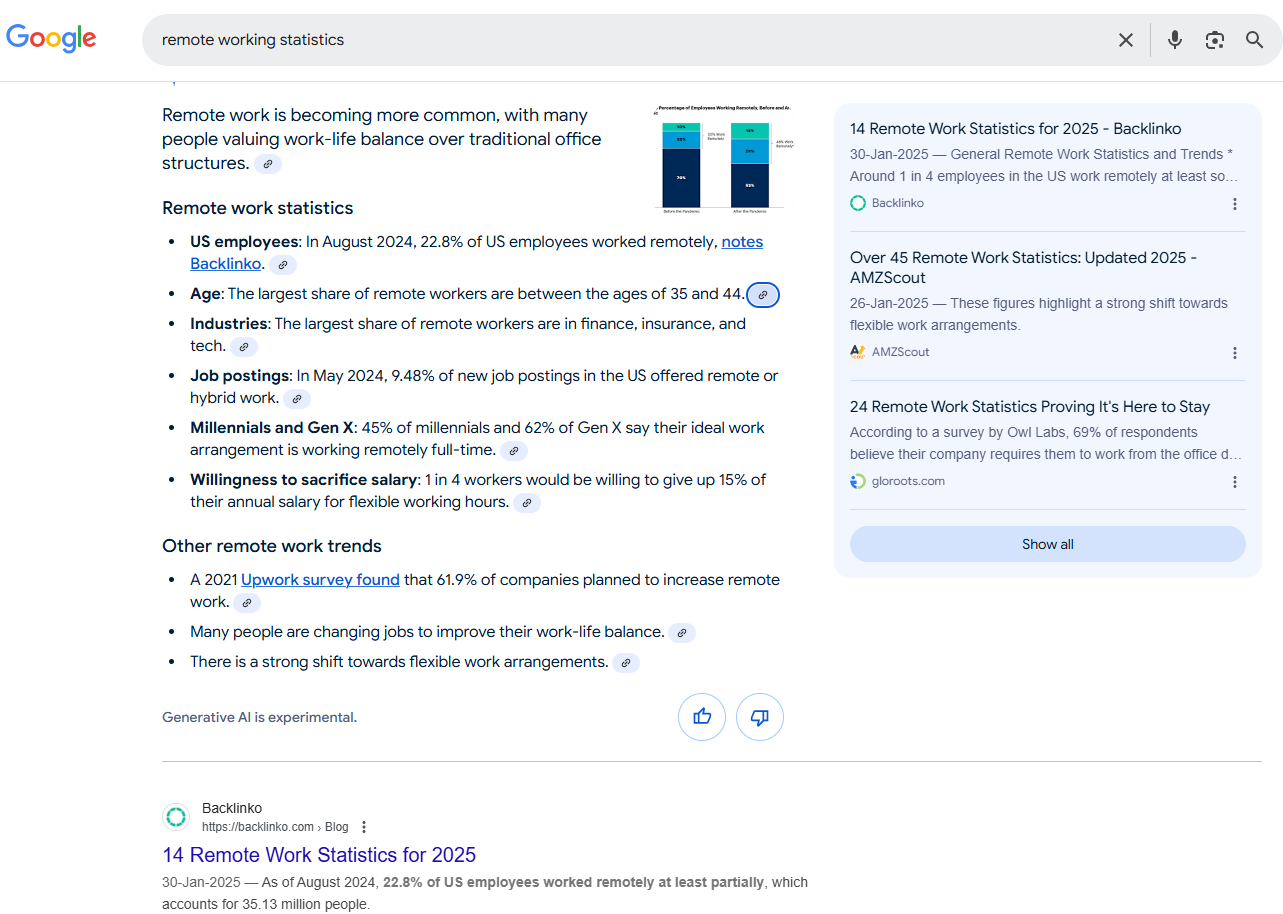
Google offers a multitude of trustworthy and real-time information via a number of channels, such as:
- Google Surveys: This tool lets you quickly build surveys and collect replies from specific audiences if you need unique data. It’s a fantastic method to give your material unique perspectives.
- Google Trends: You may examine search patterns over time. To produce current and pertinent content, you can analyse terms, find emerging trends, and pinpoint seasonal interests.
- Google Scholar: It is a great resource if you’re looking for scholarly papers, case studies, or articles with supporting research. It provides reliable sources and peer-reviewed research.
In addition to Google’s resources, you may explore other tools to obtain valuable data:
Websites with Q&A
Explore user-generated queries and professional answers on Quora.

Tech and specialised areas with expert discussions can benefit from using Stack Exchange.
Answers.com is a community-powered Q&A site that offers a range of industry insights.
Social Media Platforms
Twitter (X): Keep an eye on industry conversations and popular subjects.

LinkedIn: Locate business case studies, whitepapers, and expert insights.
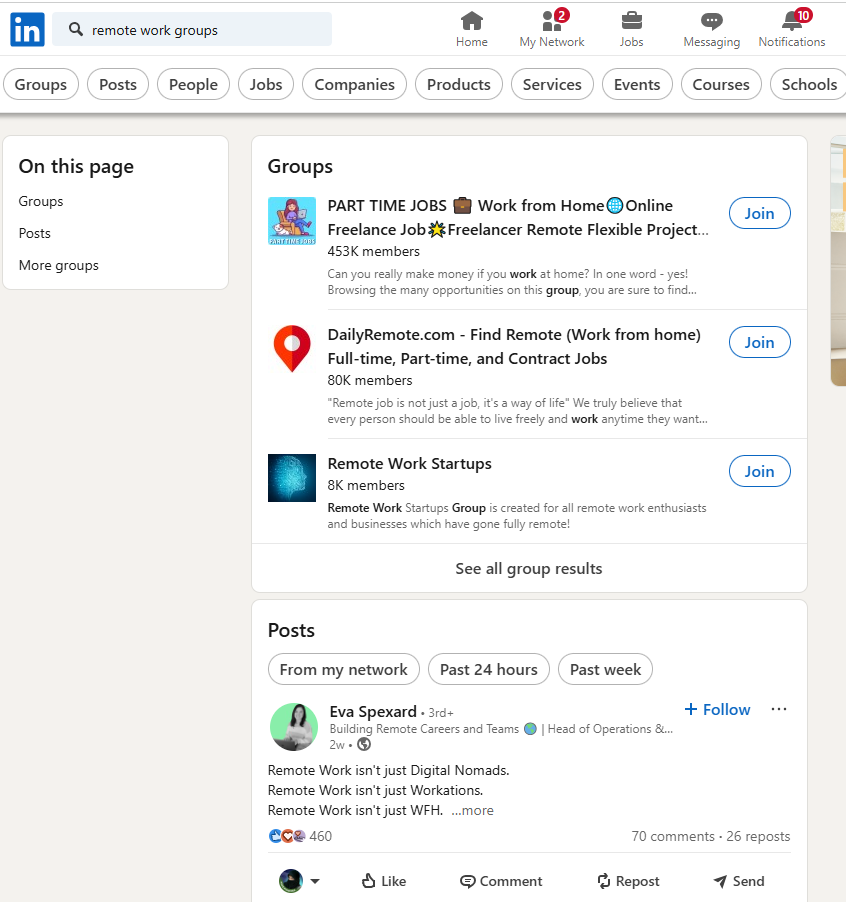
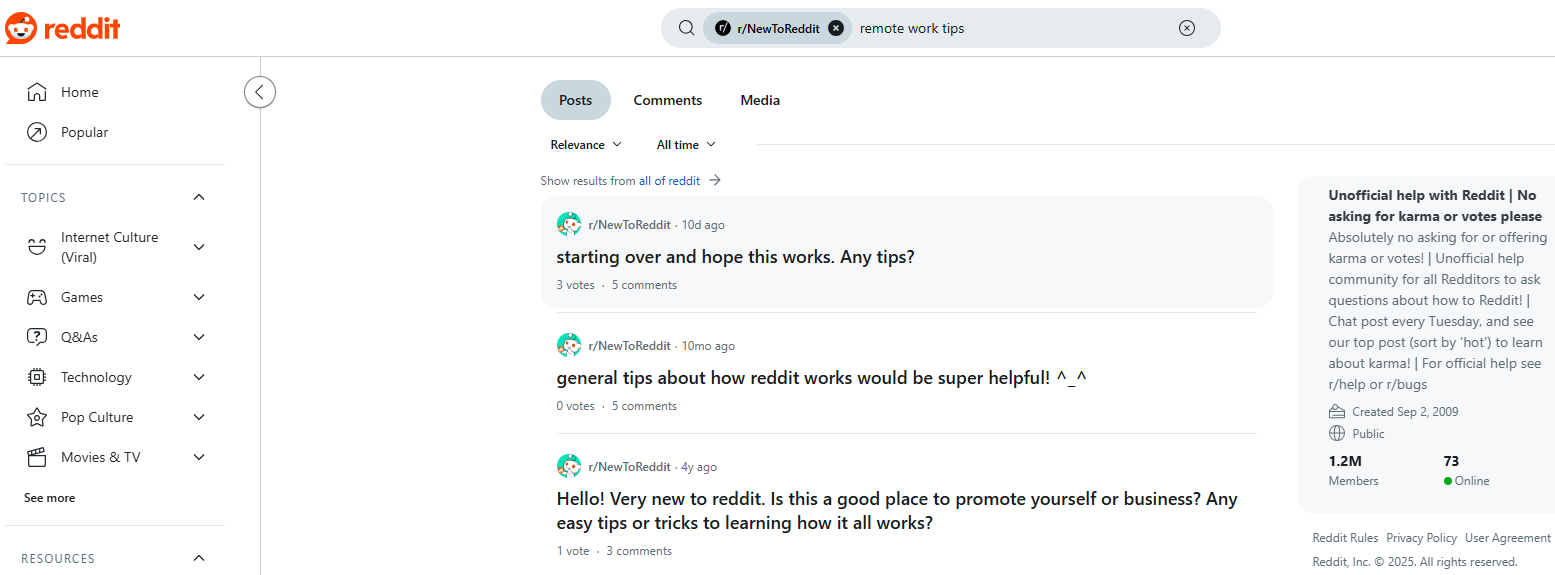
Participate in speciality communities on Facebook and Reddit to learn about the problems and often asked questions of your audience.

Industry Blogs & News
To stay up to date on your niche, follow leading industry blogs, news portals, and websites such as HubSpot, Moz, or Search Engine Journal.

Video Sharing Platforms
YouTube may be a research treasure trove of case studies, tutorials, and expert interviews.

Vimeo: Offers instructional videos and presentations of excellent quality.

By exploring these resources, you can improve your blog with new viewpoints and insights.
7. 3 Top Tools for Blog Content Research
Here are three powerful tools to enhance your content research:
1. ChatGPT
A powerful AI tool for generating content ideas, analysing trends, summarising articles, and providing insights based on large amounts of online data. It can help you fine-tune your research process, create outlines, and come up with new ideas for your material.
2. AnswerThePublic
This application uses Google’s autocomplete searches to produce keyword-based questions, comparisons, and prepositions. It assists you in determining what your target audience is asking, ensuring that your material is relevant to user queries.
3. SurferSEO
It is a data-driven content optimisation tool that analyses top-ranked articles and recommends adjustments based on keyword density, word count, readability, and related keywords. It aids in optimising material for search engines.
The Final Word
Picture this: After hours of writing, your blog lands on page five of Google, unnoticed and unread. Isn’t this frustrating?
Consider a different scenario: Your blog appears on the first page, attracting curious visitors, stimulating engagement, and developing authority. What caused the difference? Solid content research.
Every successful blog begins with an awareness of what your target audience genuinely wants. By understanding keyword research, analysing search intent, and utilising the best content tools, you can generate effective, search-optimized, and reader-friendly blogs.
Start applying these research techniques today to create high-ranking, engaging content!
Begin researching, fine-tune your content strategy, and watch your website increase in the rankings. Because great content is more than simply writing; it is thoroughly researched, optimised, and provided with accuracy.
So, take the first step today, use these research techniques to make your content shine and become a pro content researcher!
FAQs
How do you conduct content research?
Ans. Concentrate on the correct issue. Analyse the search intent. Ask yourself what additional value you can provide. Consult subject matter experts (SMEs). Utilise social media. Engage in collaborative marketing. Run surveys.
What is content research in SEO?
Ans. In SEO, content research involves analyzing competitors, search trends, and audience behavior to find the most effective topics. Based on these findings, you can identify content gaps on your website or in current pages that you can address, thereby informing your entire strategy.
How long should content research take?
Ans. 15-25% of your content creation time should be dedicated to research.
Which tools are ideal for content research?
Ans. Google Keyword Planner, ChatGPT, AnswerThePublic, SEMrush, and SurferSEO.
How do I discover trending blog topics?
Ans. Utilise Google Trends, social media, and industry blogs.
How can I determine the credibility of my research sources?
Ans. Check information from numerous credible sources, such as government websites, research papers, and authoritative blogs.
Can AI tools help in content research?
Ans. Yes, AI platforms such as ChatGPT and Jasper AI can assist you develop content ideas, outlines, and keyword suggestions.
What are some common blunders in content research?
Ans. Using out-of-date information, neglecting search intent, and irrelevant keywords.