

Artificial intelligence is no longer a “nice to have” in marketing. It’s the operating system. McKinsey estimates generative AI could add $2.6T–$4.4T in value to the global economy each year, with marketing and sales among the biggest beneficiaries.
Marketers are already leaning in: a global SAS survey of 1,600+ marketers found 96% are using AI somewhere in their workflow, and 77% specifically use generative AI, most commonly for content creation and copy.
Meanwhile, AI is shaping how customers discover and buy. Adobe reported that genAI influenced “hundreds of billions” of dollars in U.S. online sales in 2024, evidence that AI isn’t just a back-office tool; it’s a front-door growth driver.
What this means right now:
- AI will keep amplifying high-leverage marketing work (creative, personalization, testing) while automating routine tasks (drafting, resizing, summarizing). McKinsey puts ~75% of genAI’s potential value across customer operations, marketing & sales, software, and R&D, exactly where marketers live.
- Teams that pair AI with distinctly human skills, insight, empathy, strategy, will outpace those that chase tools without changing how they work.
Bonus tip: Treat AI like a force multiplier, not a replacement. Start by mapping repetitive tasks AI can absorb, then reinvest your time in strategy, testing, and creative judgement.
What exactly is Artificial Intelligence (AI)?
AI refers to computer systems that perform tasks requiring human intelligence, perceiving patterns, making predictions, generating language or images, and optimizing actions. Today’s marketing stack uses:
- Predictive AI (forecasting churn, CLTV, lead scoring)
- Generative AI (text, images, audio, video)
- Agentic AI (goal-directed “agents” that take multi-step actions, e.g., drafting, posting, and iterating campaigns)
Key point: For marketers, the power isn’t just smarter models; it’s data + models + workflow integration. AI’s value surfaces when it’s embedded in content systems, ad ops, CRM, and analytics.
Why Is AI Reshaping the Job Market?
Two big shifts:
- Exposure: The IMF estimates ~40% of global jobs are exposed to AI, and ~60% in advanced economies, with both displacement risk and productivity upsides depending on how firms redeploy labor.
- Skill disruption: WEF finds nearly half of skills may change meaningfully over a five-year horizon, with analytical thinking, creativity, and AI literacy rising fastest.
So what? Marketing roles won’t vanish; they’ll recompose. Routine work compresses; value shifts to sense-making, creative direction, experimentation, stakeholder influence, and ethical governance.
Bonus tip: Build a portfolio of proofs (campaigns, experiments, playbooks) showing how you use AI to move KPIs. Portfolios beat résumés in AI-heavy hiring.
The Current State of AI in Marketing
- Adoption is mainstream: 96% using AI; 77% using genAI for content; measurement and personalization are fast followers.
- Economic upside is real: McKinsey attributes a large share of genAI’s total value to marketing & sales use cases.
- Consumer journey impact: GenAI already influences significant online revenue, accelerating product discovery, recommendations, and conversion.
Key point: The frontier is moving from “AI for outputs” (more content) to “AI for outcomes” (revenue, CAC/LTV, ROAS).
Emerging AI Trends in Marketing
Agentic AI & Copilots
Marketing platforms are rolling out agents that plan, create, publish, and iterate with less human micromanagement. McKinsey highlights “agentic AI” as a next-step capability wave.
Creative Suites With Native AI
Adobe and Canva continue to embed genAI for image/video creation, resizing, brand consistency, and template automation—shortening time-to-asset.
Privacy & First-party Data Revival
With Google delaying third-party cookie deprecation again, marketers are doubling down on first-party data, consent, and contextual targeting to avoid strategy whiplash.
Performance Automation
Media buying, creative testing, and budget reallocation increasingly run with AI assistance (e.g., asset-level scoring, automated variant generation). Forrester and Gartner both point to AI’s central role in next-gen marketing execution
Bonus tip: Don’t overfit any one vendor’s AI roadmap. Keep a composable stack with clean data contracts and API access.
AI Marketing Tools Spotlight
Pricing is listed as public at time of writing; always verify current plans before purchasing.
1) Jasper (AI Platform for Marketers)

What it does: Brand-safe content creation at scale (Brand Voice, style guides), campaign workflows, chat, image suite.
Key features: Brand Voice & Visual Guidelines, campaign briefs, collaboration, templates.
Pros: Strong brand-governance layer; marketing-specific workflows.
Cons: Best value realized in teams with clear brand systems.
Pricing: Creator $49 ($39/yr), Pro $69 ($59/yr), Business custom.
2) Copy.ai (Content & Workflows)
What it does: Long-form content, sales/marketing workflows, blog to social repurposing.
Key features: Templates, workflows, team collaboration.
Pros: Fast to spin up with templates.
Cons: Governance and deep brand controls lighter than some enterprise suites.
Pricing: Pro $49/mo, Team $249/mo, Enterprise custom.
3) Canva (Magic Studio for Marketing Design)
What it does: Design, presentations, social content with genAI (Magic Design/Write/Edit/Expand).
Key features: Templates, brand kits, AI-assisted editing.
Pros: Extremely accessible; speeds social and presentation production.
Cons: Complex brand systems may outgrow lightweight controls.
Pricing: Free; Pro ~$14.99/mo; Teams pricing available.
4) Adobe Firefly (GenAI Inside Creative Cloud)
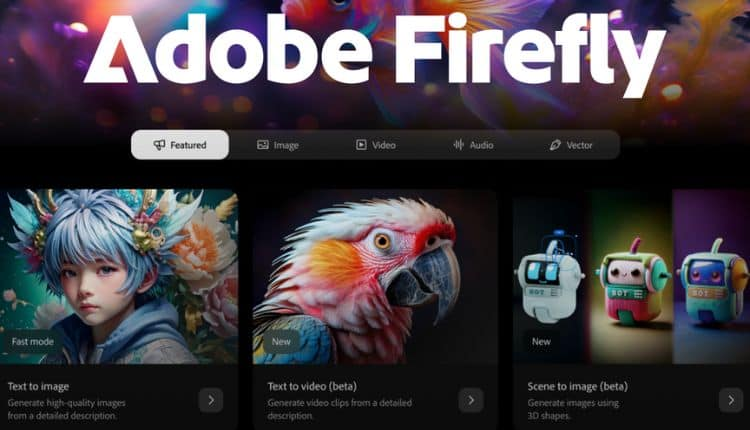
What it does: Text-to-image, generative fill/expand, and other features integrated in Photoshop/Illustrator/Express.
Key features: Commercial-safe models trained on licensed content; generative credits system.
Pros: Deeply integrated with pro creative workflows; brand-quality outputs.
Cons: Power users must manage generative-credit usage.
Pricing: Available via Creative Cloud plans; credits vary by plan.
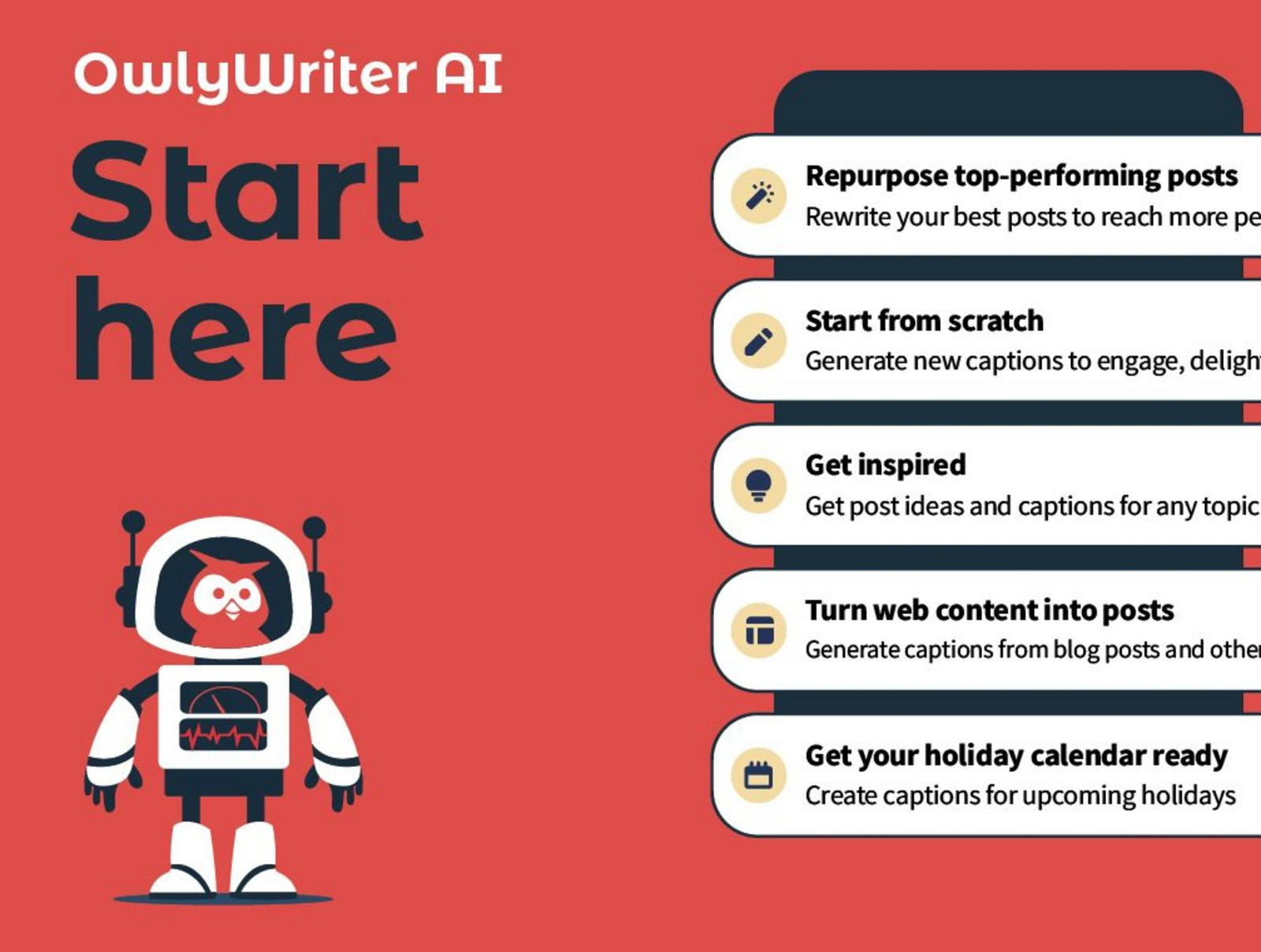
5) Hootsuite + OwlyWriter AI (Social Publishing + AI)
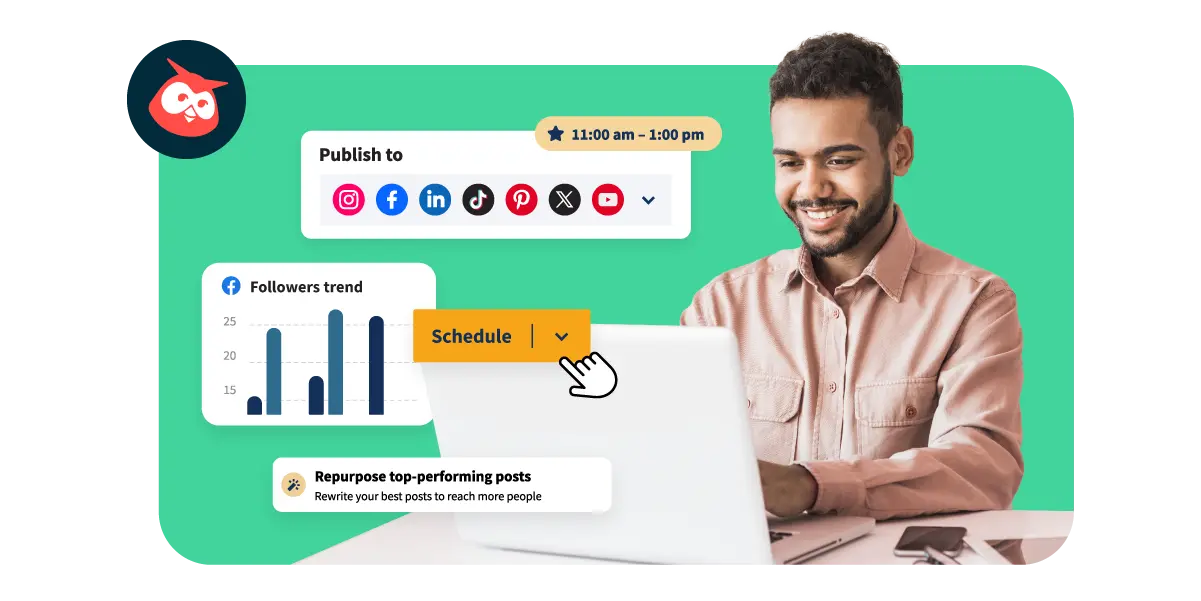
What it does: Plan, publish, and analyze social content; OwlyWriter generates captions/ideas.
Key features: Calendar, approvals, analytics; AI for ideation/captions.
Pros: Social scheduling + AI in one place.
Cons: Best for teams already centralizing social in Hootsuite.
Pricing: Standard $99/mo with 10 social accounts (annual billing).
6) Descript (AI-Assisted Audio/Video)
What it does: Record, edit, overdub, transcribe, and publish podcasts/shorts from docs-like editors.
Key features: Text-based editing, overdub, filler-word removal, captions.
Pros: Dramatically accelerates A/V content for social and webinars.
Cons: Broadcast-level polish may require advanced tools beyond Descript.
Pricing: Free, Standard from ~$15/mo, Pro from ~$30/mo.
Bonus tip: Pick one content tool (Jasper/Copy.ai), one design tool (Canva/Adobe), and one distribution tool (Hootsuite). Integrate all three with analytics before you scale.
The Skills That AI Can’t Touch (Yet)
A personal lesson: I used to think technical skills were everything. Then genAI began automating code and drafts. The edge isn’t typing faster, it’s thinking better.
Emotional Intelligence & Human Connection
AI handles FAQs; it struggles with nuance, fear, and motivation. Coaching a founder through a pivot, mediating a brand crisis, rallying a team, these are human moments AI can’t lead. In 2026 and beyond, leaders who read the room, de-escalate conflict, and inspire action will outperform any stack.
Creative Problem-Solving & Systems Thinking
Most business problems are messy systems, not clean puzzles. AI can analyze, but you connect dots across culture, product, ops, and incentives. The best marketers frame problems well, hypothesize unusual tests, and orchestrate cross-functional change.
Key point: The winning combo is AI for scale + humans for meaning.
The Careers That Are Thriving with AI
- Marketing Strategists & Growth Leaders: Turn AI signals into positioning, offers, and channel mixes.
- Lifecycle/CRM Marketers: Automate journeys, personalization, and experimentation across email, push, in-app.
- Creative Directors & Brand Systems Designers: Use AI to expand concepts while enforcing brand governance.
- Marketing Analysts & Revenue Ops: Translate AI insights into budget moves and pipeline impact.
- Content & Media Producers: Multiply output with AI editing, voiceover, and repurposing.
WEF lists AI and Big Data as top growth job categories; roles intertwine with marketing (analytics, product, content).
Bonus tip: Pair your craft with AI fluency: e.g., “Brand Creative + AI governance,” or “Lifecycle + LLM prompts + analytics.”
The Mindset Shift That Changes Everything
Stop asking “What can AI do?” and start asking “What outcomes matter?” Then design human-in-the-loop systems where:
- AI drafts/options →
- You decide/curate →
- AI launches/tests →
- You read the results and change the brief.
McKinsey notes genAI’s largest value emerges when organizations re-architect work, not when they bolt tools on top.
Bonus tip: Track time-to-first-draft, variant velocity, test cadence, and decision lag. If those improve, ROI follows.
What 8 Skills Do Marketers Need to Use AI Effectively?
The truth is, AI won’t replace marketers, but marketers who understand AI will replace those who don’t. In this new era, success isn’t about mastering every tool, but about learning how to think, strategize, and create alongside technology.
AI can analyze data faster than any human, but it still needs direction, creativity, and emotional intelligence to drive meaningful results. The best marketers of 2026 will be the ones who blend human insight with AI precision.
Here are eight future-proof skills every marketer needs to not only survive but thrive in the AI-powered marketing landscape.
1. Prompt Craft & Brief Writing
Write structured prompts (objectives, audience, tone, constraints) and reusable prompt libraries. Great prompts = better outputs = less edit time.
2. Data Literacy & First-Party Data Strategy
Understand data sources, consent, joins, and leakage. With third-party cookies delayed (again), first-party data is your durable edge.
3. Experiment Design & Causal Thinking
Move beyond vanity A/Bs. Use clear hypotheses, power calculations when possible, and guardrails against p-hacking. Tie experiments to business KPIs.
4. Brand Governance for AI
Define voice, style, claims, and compliance rules AI must honor. Tools like Jasper emphasize brand controls; make yours explicit.
5. Creative Direction with AI
Guide models with moodboards, references, negative prompts, and iterative feedback to land on on-brand assets faster.
6. Toolchain & Workflow Integration
Know how to connect content → approvals → DAM → CMS/ads → analytics. Favor API-friendly tools to avoid lock-in.
7. Ethics, Safety & Disclosure
Set policies on data privacy, bias checks, content disclosure, and copyright. Build trust by explaining how AI is used in customer touchpoints.
8. Narrative & Stakeholder Communication
Translate AI outcomes into stories leaders care about: revenue, efficiency, and risk reduction. Clear dashboards, clearer decisions.
Bonus tip: Run a quarterly skills sprint: pick 1 skill, ship 2–3 internal case studies, share a playbook with the team.
Conclusion: The Future Is Human + AI
The winners won’t be the teams with the most tools. They’ll be the teams that combine AI’s speed with human judgment, empathy, and brave ideas. Treat AI as your creative and analytical exoskeleton: let it scale drafts, variants, and ops while you focus on meaning, strategy, and outcomes.
Key takeaway: Ship more experiments, shorten feedback loops, and make brand governance explicit. That’s how you turn AI from a cost line into a growth engine.
The future of marketing belongs to those who evolve with it and that future starts now.
DM us today to learn how you can integrate AI tools, automation, and smarter strategies into your marketing approach. Let’s build a future where your creativity meets AI efficiency and your brand leads the next wave of digital innovation.
FAQs
What skills are important in the age of AI?
Prompting, data literacy, experiment design, brand governance, creative direction, workflow integration, ethics, and executive communication (see list above).
How do I future-proof my career?
Build a portfolio that proves you can use AI to move KPIs. Pair a craft (e.g., lifecycle, brand) with AI fluency and measurable wins.
What is the future of AI in marketing?
Agentic AI will automate multi-step tasks, while creative tools bake in genAI. The biggest value remains in marketing & sales use cases.
What’s worth learning in the age of AI?
First-party data strategy, experiment design, creative direction with AI, and ethical governance, skills that augment AI rather than compete with it.
Will AI replace marketers?
Parts of roles will automate, but net impact depends on redeployment. IMF finds high exposure, especially in advanced economies, so reskilling is key.
Which industries use AI marketing most?
E-commerce, tech, finance, and media lead adoption; creative suites and ad platforms have deeply embedded AI already.
Are marketers really using AI today?
Yes! 96% report using AI; 77% use genAI today, especially for content and copy.
How does privacy affect AI marketing?
With third-party cookie deprecation delayed, teams are doubling down on first-party data and consent frameworks to future-proof personalization.