
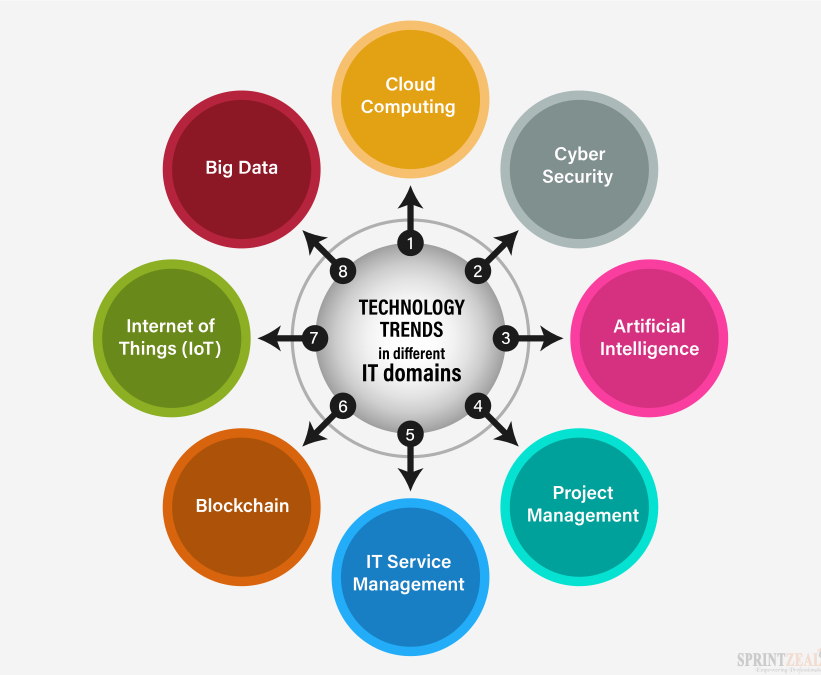
The tech landscape in 2026 is booming. Global IT investment is set to surpass $5.7 trillion last year, roughly a 9–10% jump from 2024, as companies pour resources into innovation. This spending surge spans cloud, AI, cybersecurity, and more, reflecting broad confidence. Notably, about 77% of businesses are now using or exploring AI, and analysts project global AI spending will exceed $200 billion in 2026. Beyond AI, firms are doubling down on cloud and 5G upgrades, hybrid work technologies and sustainability initiatives to stay competitive. For example, experts at IDC forecast around $1.3 trillion in cloud-service spending by 2026, underscoring cloud’s critical role. At the same time, enterprises face escalating cyber risks: the average organization now sees about 1,636 cyberattacks per week – a 30% yearly rise. These and other emerging technologies (from wearable AR devices to advanced robotics) promise to reshape industries this quarter and beyond.
Organizations of all sizes are adopting AI everywhere. Google Cloud highlights hundreds of generative AI deployments by industry leaders (Wendy’s, Uber, Mercedes-Benz, etc.) to speed up operations. This “AI everywhere” moment is real: customer service chatbots handle drive-thru orders, carmakers use AI for smart navigation, and banks deploy AI to detect fraud. These developments show how AI tools and machine learning are driving innovation in 2026.
New connectivity and cloud advancements are another cornerstone. For instance, the expansion of 5G networks and edge computing is enabling faster data transfer for IoT applications in smart cities and industry. Cloud infrastructure growth is also huge: IDC predicts global cloud spend will reach $1.3 trillion by 2026. A market analysis notes that integrating AI, machine learning, and big data with cloud services is a key driver of cloud growth. In practice, this means more organizations are shifting to hybrid or multi-cloud setups and using powerful cloud AI tools for data analytics, giving businesses unprecedented agility. Meanwhile, new platforms and chips are supporting these trends, from advanced GPUs for AI to specialist semiconductors in devices.
At the same time, cybersecurity and data privacy remain major concerns. Companies are investing heavily in digital trust solutions: for example, Gartner forecasts a ~15% rise in cybersecurity budgets in 2026. Global spending on security services is expected to top $212 billion. This reflects urgent needs: malware, ransomware and phishing attacks are growing more sophisticated (often with the help of AI), and regulations like the EU’s Cyber Resilience Act and DORA are raising the bar for protecting user data. In response, organizations are adopting zero-trust architectures, AI-driven threat detection, and stronger encryption to safeguard data. All of these factors together, skyrocketing AI adoption, cloud expansion, and security imperatives, make tech trends this quarter especially dynamic.
Top 5 Technology Trends to Watch This Quarter
The tech world is evolving at lightning speed, and staying ahead means keeping an eye on the most impactful shifts shaping industries. From AI breakthroughs to green technology, these trends are not just buzzwords, they’re transforming how businesses operate, innovate, and compete. Let’s break down the five hottest tech trends this quarter that every business leader and professional should be watching closely.
-
Artificial Intelligence & Machine Learning Innovations
Artificial Intelligence is revolutionizing virtually every industry. Generative AI and large language models (like GPT-5 and similar systems) now power tools for writing, design, code generation, and more. Over three-quarters of companies report they are using or piloting AI in core business functions. These AI systems are not futuristic anymore, they are deployed in everyday applications. For example, companies like Mercedes-Benz and Continental integrate AI-based voice assistants into cars for conversational navigation, and Samsung uses AI to make its latest smartphones and even its home robot “Ballie” more responsive. Financial firms (Citigroup, Deutsche Bank, etc.) are using AI to speed up market analysis and stop fraud.

Investments in AI are surging, but experts caution companies to focus on practical use cases. After the initial AI hype cycle, many leaders are looking for high-impact applications, so-called “AI agents” that can autonomously handle tasks. Gartner even identifies “agentic AI” (AI with planning and initiative) as a key emerging trend. Meanwhile, major tech vendors are building next-gen AI chips and software platforms to support this demand. IDC reports over $200 billion will be spent on AI solutions in 2026. In short, AI breakthroughs in 2025, from smarter chatbots and recommendation engines to predictive analytics and autonomous agents, are a top trend to watch. Businesses that leverage these AI tools and training will be better positioned to innovate.
-
Cloud Computing & Advanced Connectivity
Cloud computing continues to expand and converge with other tech trends. Enterprises are moving more workloads to public and hybrid clouds, seeking scalability and real-time data processing. IDC analysts project global cloud infrastructure spending to climb to $1.3 trillion by 2026. Cloud providers (AWS, Azure, Google Cloud, etc.) are rolling out increasingly sophisticated services, AI-as-a-Service, edge-cloud gateways, and so on. This quarter, look for new cloud offerings that integrate cutting-edge AI/ML tools and stronger multi-cloud orchestration. In fact, a recent market study highlights that combining AI, big data, and machine learning with cloud platforms is a key growth driver for the cloud market.
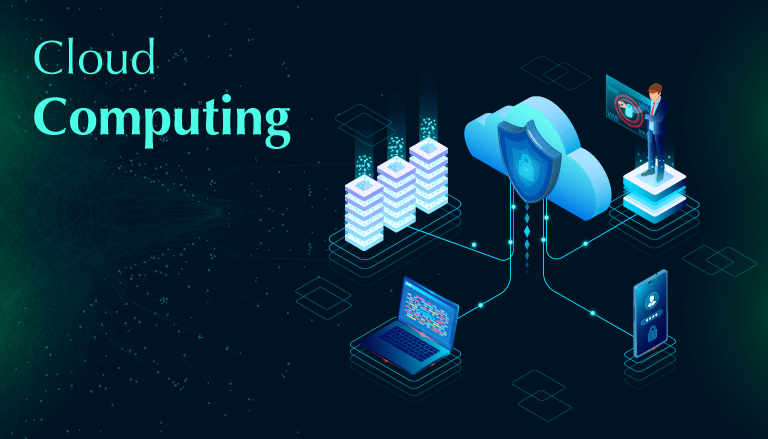
Connectivity technologies are also advancing. The rollout of 5G and early 6G research means businesses can deploy low-latency applications like augmented reality, industrial IoT, and remote operations. For example, manufacturing plants are using 5G for real-time robot control, and healthcare organizations experiment with remote surgery over 5G links. The rise of edge computing (processing data near sensors) further complements cloud: by keeping data local, it reduces lag and bandwidth needs for IoT devices. Together, cloud and connectivity innovations are shaping a “digital spine” for businesses, enabling faster collaboration, data-driven decision-making, and new service models like on-demand video or AR-enabled shopping.
-
Cybersecurity & Data Privacy
As technology advances, so do cybersecurity threats. This quarter, security trends are dominated by AI-driven attacks and privacy regulations. One striking stat: over the past year, the average number of cyberattacks per organization per week jumped 30% to about 1,636. Threat actors leverage AI to craft more convincing phishing emails or break encryption. In response, companies are ramping up security budgets. Gartner expects cybersecurity spending to rise ~15% in 2026, with total global security expenditures hitting roughly $212 billion.

Key shifts include the broad adoption of zero-trust security models, where every user and device must be continuously verified. Many organizations are also enhancing endpoint protection and securing cloud workloads. Data privacy, meanwhile, is in the spotlight: new laws (such as the US’s ICTS Rules and expanded privacy regulations) require firms to better safeguard personal data and network infrastructure. Advanced privacy tools, from AI-based anomaly detectors to homomorphic encryption are gaining traction. Businesses should watch for trends like privacy-by-design in product development and automated compliance (for example, blockchain-based data audit trails) as regulators stiffen standards. Overall, expect cybersecurity and data protection initiatives to be must-have priorities for companies adapting to new tech.
-
Automation, Robotics & Future of Work
Automation continues to transform labor and manufacturing. Advanced robotics and AI-driven machines are now commonplace in factories and warehouses. For instance, Amazon’s fulfillment network is a prime example: it has deployed over 750,000 robots to sort, lift, and transport goods. Just recently Amazon celebrated its one-millionth robot, part of a fleet coordinated by a new “DeepFleet” AI platform. This innovation is expected to improve the robots’ travel efficiency by about 10%. The result? At Amazon’s newest automation-heavy centers, productivity is projected to jump roughly 25%, helping employees work faster and more safely.
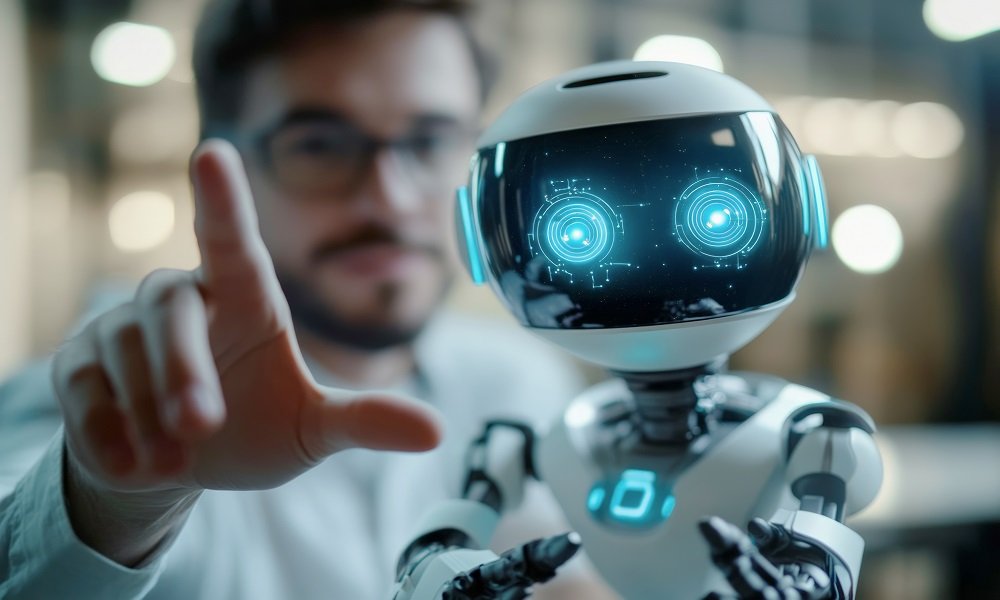
Manufacturers are seeing similar gains. Tesla’s “smart factories” use AI and robotics throughout assembly: its modular “unboxed” production lines can cut factory footprint by ~40% and reduce production costs by ~50%.On the product side, Tesla’s Autopilot self-driving features demonstrate how AI enhances vehicles: on average, Tesla’s driving with Autopilot engaged have one crash per 7.08 million miles, far better than the typical U.S. driver’s 670,000-mile crash rate.
The rise of automation is also reshaping the workforce. Many companies are expanding telework and hybrid work policies (in 2024, hybrid/remote work rose to 38% of employees from 15% in 2023) enabled by cloud collaboration tools. Meanwhile, even blue-collar jobs are evolving: new roles in robot maintenance, AI training, and data analysis are growing. Overall, robots and AI-powered tools are complementing human work. For businesses, this means investing in employee upskilling (training staff on AI tools and robotics) will be essential to fully benefit from these trends.
Amazon’s new AI-driven system (“DeepFleet”) coordinates its one-million-robot warehouse fleet, cutting travel time and boosting fulfillment speed. This kind of advanced robotics system exemplifies how automation is transforming supply chains.
-
Green Technology & Emerging Innovations
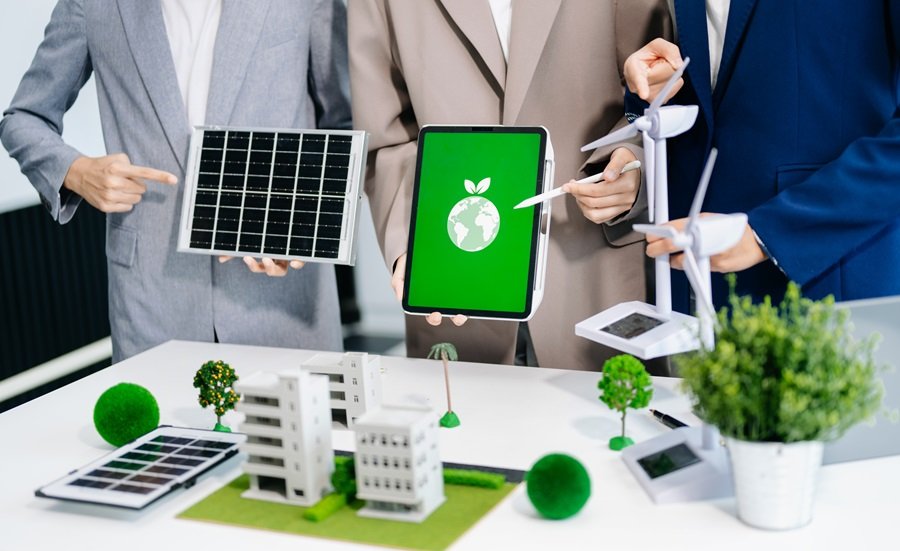
Sustainability and health-tech are hot areas this quarter. Green technology innovations are accelerating: for example, researchers are developing structural battery composites that integrate battery material into a vehicle’s body. This could make electric vehicles lighter and more efficient, as the body itself stores power. In renewable energy, projects like osmotic power plants (generating energy from saltwater gradients) and advanced nuclear designs (e.g. small modular reactors) are moving closer to reality.
Biotechnology is another frontier. One exciting trend is engineered living therapeutics, genetically modified microbes or cells that act as “bio-factories” inside the body to produce medicines on demand. This approach promises to cut drug manufacturing costs by around 70% and provide continuous treatment, as if the patient’s body were its own pharmacy. Other areas to watch include next-gen wearables (health-monitoring implants and smart textiles) and AI in drug discovery.
Finally, many companies are pursuing digital transformation with a green twist. For example, data centers are increasingly using renewable power and AI-driven cooling to reduce emissions. Smart agriculture tech (using sensors and AI to minimize fertilizer use) helps address food security and pollution. All these emerging technologies combine to show that this quarter’s tech trends go hand-in-hand with sustainability and societal impact.
Real-World Examples
Amazon’s Autonomous Warehouses
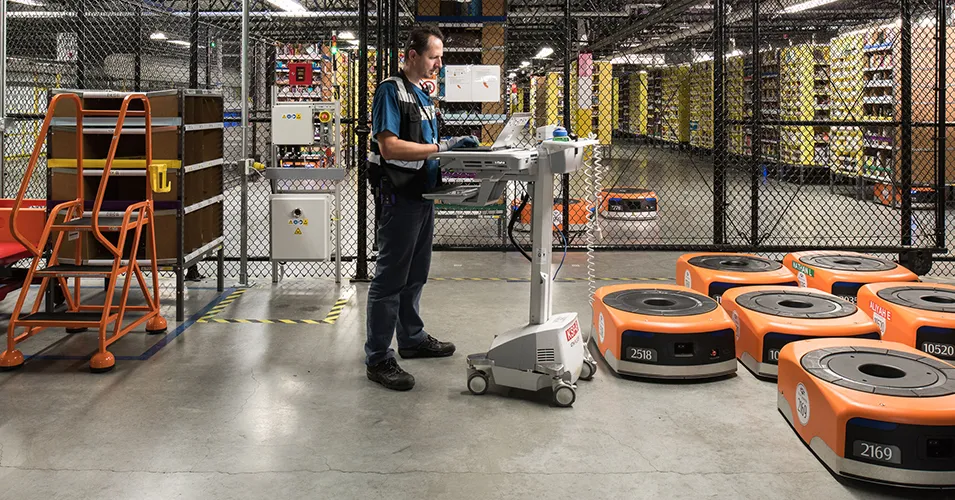
Retail giant Amazon provides a clear example of automation in action. Its more than 750,000 warehouse robots (as of 2026) work alongside humans to pick and pack orders. Recently, Amazon unveiled DeepFleet, a new AI coordination platform for its robots that cuts their travel time by ~10%. By integrating AI, cloud data, and robotics, Amazon has achieved up to a 25% productivity gain at next-gen facilities. This shows how combining cloud computing and AI with robotics can streamline logistics and speed up delivery times.
Tesla’s Smart Manufacturing & Autopilot
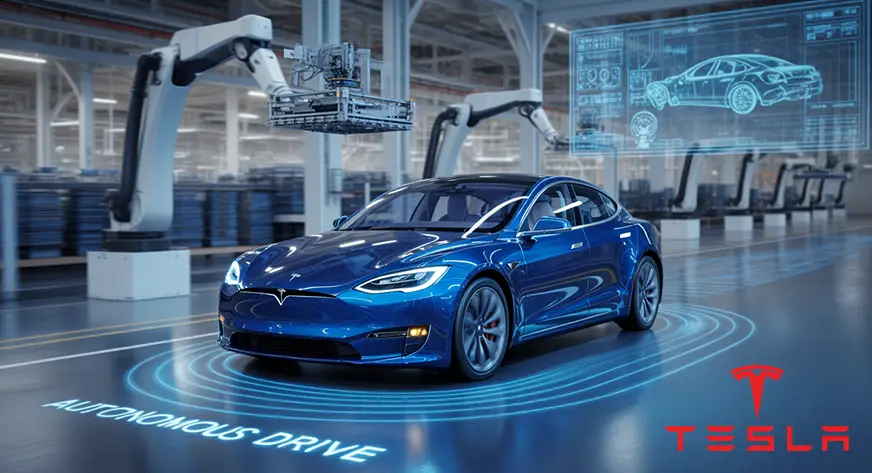
Electric vehicle maker Tesla uses AI at every step. Its advanced factories use AI-driven robots to assemble cars. A new “unboxed” production process (split into large submodules) can reduce factory footprint by ~40% and slash costs by ~50%. On the consumer side, Tesla’s cars use powerful onboard AI for driver-assist features. In practice, Tesla reports that vehicles on Autopilot had one crash per 7.08 million miles, far fewer than the U.S. driving average. These numbers illustrate how AI and automation improve both manufacturing and product performance in the real world.
AI Across Industries
Many companies are embedding AI into services. For example, fast-food chains like Wendy’s and Papa John’s now use predictive AI to speed order processing, while ride-share and logistics apps (like Uber) apply AI to manage demand and routing. Similarly, Mercedes-Benz and General Motors have introduced AI-powered voice assistants in their vehicles, and tech firms like Samsung add AI to smartphones and home robots to enhance user experience. Financial institutions (Citi, Deutsche Bank, etc.) deploy AI analytics to detect fraud and offer personalized services. These cases show how businesses in diverse sectors leverage the current tech trends, from generative AI to cloud services, to innovate and gain a competitive edge.
Final Words
The future isn’t coming, it’s already here. From AI breakthroughs to 5G expansion, this quarter’s hottest tech trends are reshaping the way businesses work, grow, and compete. Those who adapt now will be the ones leading tomorrow.
Don’t just watch the trends, act on them.
Start experimenting, upgrading, and integrating these innovations into your business today.
Have insights or questions? Drop them in the comments or connect with our team to explore how these trends can drive results for you.
FAQs
What is the most trending topic in technology?
AI and automation remain the hottest tech trends in 2026.
Which is the best tech blog?
TechCrunch, Wired, and The Verge are among the top tech blogs.
What are the top 10 technologies today?
AI, cloud computing, 5G, green tech, wearable tech, blockchain, cybersecurity, IoT, robotics, and AR/VR dominate the list.
What is the next big IT trend?
Generative AI and green technology are set to drive the next wave of IT innovation.
How can businesses adapt to new tech trends?
By embracing digital transformation and investing in future-ready tools.
What industries are most impacted by new tech?
Healthcare, finance, retail, and manufacturing are leading adopters.
Why is cybersecurity still trending?
With rising cyber threats, data protection remains a top priority in 2026.
What is the role of 5G in 2026?
5G enables faster connectivity, powering IoT, AR/VR, and smart devices.