

Finding a startup job in 2026 isn’t like applying to a Fortune 500 company. Startups move fast, hire for impact, and often skip the long, bureaucratic hiring funnels that dominate big corporations. But that speed comes with a catch. Startup roles are scattered across dozens of niche job boards, founder networks, and talent marketplaces, making them harder to find than a standard corporate listing on a mainstream job site.
If you’re a software engineer, product manager, designer, marketer, or sales professional looking to break into the startup world, choosing the right startup job platform can make the difference between landing an interview within days or sending your resume into a black hole for months.
The numbers back this up. LinkedIn alone now connects over 1 billion users across 200+ countries, and roughly six people get hired through the platform every minute globally. But more volume doesn’t always mean better matches, especially for early-stage and high-growth companies that need specialized talent fast.
In this guide, we break down the 7 best career platforms for startup jobs in 2026, covering remote-first job boards, curated talent marketplaces, and niche startup-only platforms. Whether you’re hunting for a seed-stage opportunity, a Series B scale-up role, or a fully remote position, this list will help you target the right platform for your career goals, backed by real data, pros and cons, and actionable tips for standing out.
Why Startup Job Platforms Matter in 2026
The job search landscape has changed dramatically. Startups today are competing for talent in an environment where remote roles receive up to 10 times more applications than on-site positions, and 98% of job seekers want flexible work arrangements, though only 28% actually get them. That means generic job boards are more crowded than ever and startup-specific platforms have become essential for cutting through the noise.
At the same time, hiring itself has become more competitive on the employer side. Recent data shows 10,000 applications submitted every minute on LinkedIn, competing for just seven hires. For job seekers, this means a scattershot approach, applying everywhere with the same resume simply doesn’t work anymore. You need platforms that connect you directly with hiring managers, offer salary transparency, and filter for startup-specific criteria like funding stage, team size, and remote policies.
This is exactly where dedicated startup career platforms outperform generalist job boards. They combine curated listings, direct founder access, and startup-specific filters (funding round, equity details, tech stack) that help you target companies aligned with your skills and career stage, whether you’re searching for remote startup jobs, tech startup careers, or entry-level startup positions.
The 7 Best Career Platforms for Startup Jobs in 2026
1. LinkedIn Jobs
LinkedIn remains the largest professional network in the world, and its job board is a must-use tool for any startup job search. With over 1.15 billion members and more than 65 million decision-makers, including 10 million C-level executives, LinkedIn gives job seekers direct visibility into the people actually making hiring decisions at startups.
Why it’s great for startup jobs: LinkedIn’s “Open to Work” feature and recruiter messaging tools make it easy to get noticed by startup founders and talent teams. Data shows that profiles marked “Open to Work” see 37% higher recruiter engagement, and employees sourced through LinkedIn are about 40% less likely to leave their job within the first six months compared to other channels, a strong signal of better-quality matches.
Best for: Networking-driven job seekers, professionals targeting recruiter outreach, and anyone wanting visibility across both startups and larger companies.
Pro tip: Don’t just upload a resume, optimize your headline and “About” section with role-specific keywords (e.g., “Senior Full-Stack Engineer | React, Node.js, Startup Experience”) so you appear in recruiter searches for startup roles.
Website: linkedin.com/job
2. Wellfound (formerly AngelList Talent)
Wellfound is one of the most established platforms built specifically for startup hiring, with deep roots in the venture capital ecosystem. It offers an enormous, searchable database of startup roles with detailed filters for company stage, funding amount, investors, and critically transparent salary and equity ranges.
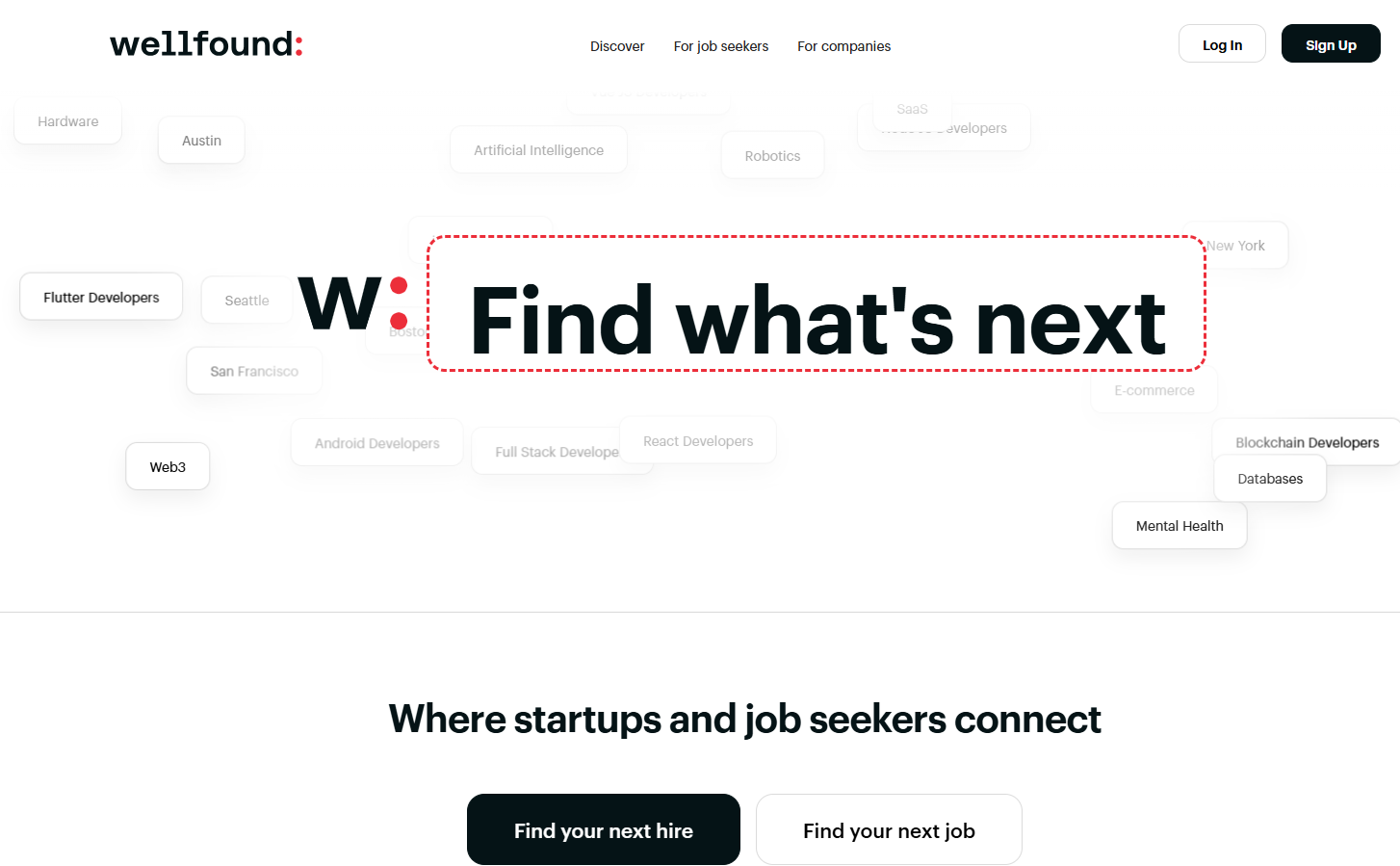
Why it’s great for startup jobs: Few platforms offer this level of transparency. You can filter by Seed through Series D+ companies and see compensation details upfront, which is rare in the startup hiring world.
Pros:
- Massive database of venture-backed startup listings
- Powerful filters for funding stage, tech stack, and location
- Salary and equity transparency on most listings
Cons:
- High volume can feel overwhelming without careful filtering
- Listing quality varies between well-funded and very early-stage companies
Best for: Job seekers who already know what type of company (stage, industry, funding level) they want to target.
Website: wellfound.com
3. Y Combinator – Work at a Startup
Y Combinator’s job platform is a direct pipeline into one of the most prestigious startup ecosystems globally. Unlike a general job board, it exclusively features companies that have gone through the YC accelerator program, an instant signal of quality and growth potential.
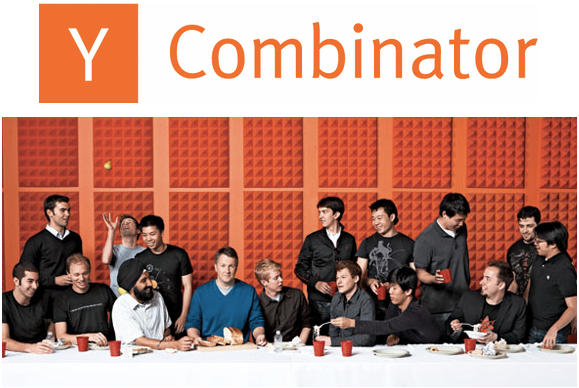
Why it’s great for startup jobs: The “one-to-many” application model lets you create a single profile and express interest across dozens of YC-backed companies simultaneously, putting you directly on the radar of founders.
Pros:
- Every company is YC-vetted
- Founders and team members reach out directly
- One profile applies broadly across the YC portfolio
Cons:
- Limited to YC-backed companies only
- Many roles are early-stage and require comfort with ambiguity
Best for: Candidates seeking high-impact roles at early-stage, high-potential startups, including “founding engineer” or “founding designer” positions.
Website: ycombinator.com/jobs
4. Built In
Built In combines traditional job listings with editorial content, company profiles, and local tech news, making it a powerful discovery tool for startup careers in major U.S. tech hubs.
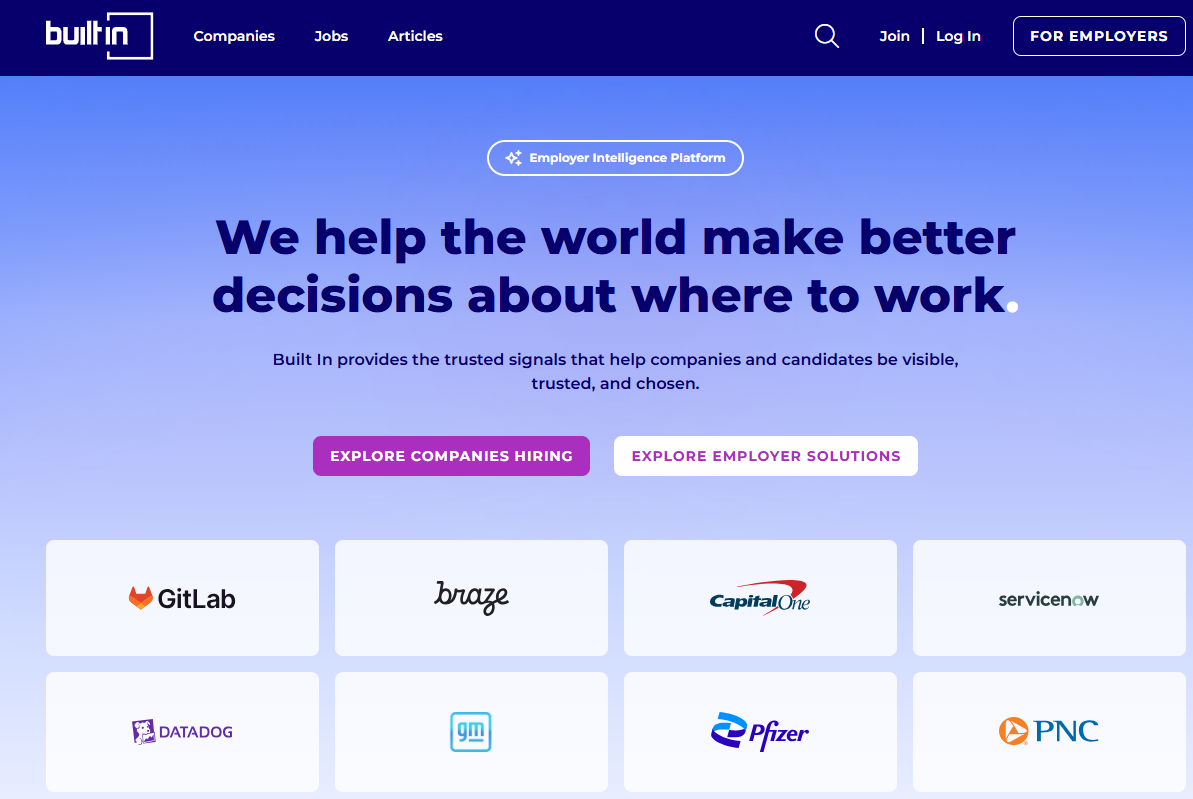
Why it’s great for startup jobs: Its hyper-local focus lets you filter by city; Austin, Chicago, NYC, Seattle or by fully remote roles, while also surfacing company culture details and salary ranges that help you research before applying.
Pros:
- Strong geographic and remote filtering
- Rich company profiles and editorial insights
- Frequent salary transparency
Cons:
- Includes large enterprise listings, so filtering for startups is necessary
- Primarily U.S.-focused
Best for: Job seekers targeting a specific city’s tech scene or researching company culture before applying.
Website: builtin.com/jobs
5. Underdog.io
Underdog.io flips the traditional job search model. Instead of applying to dozens of companies, candidates submit one application; if accepted, vetted startups apply directly to them.
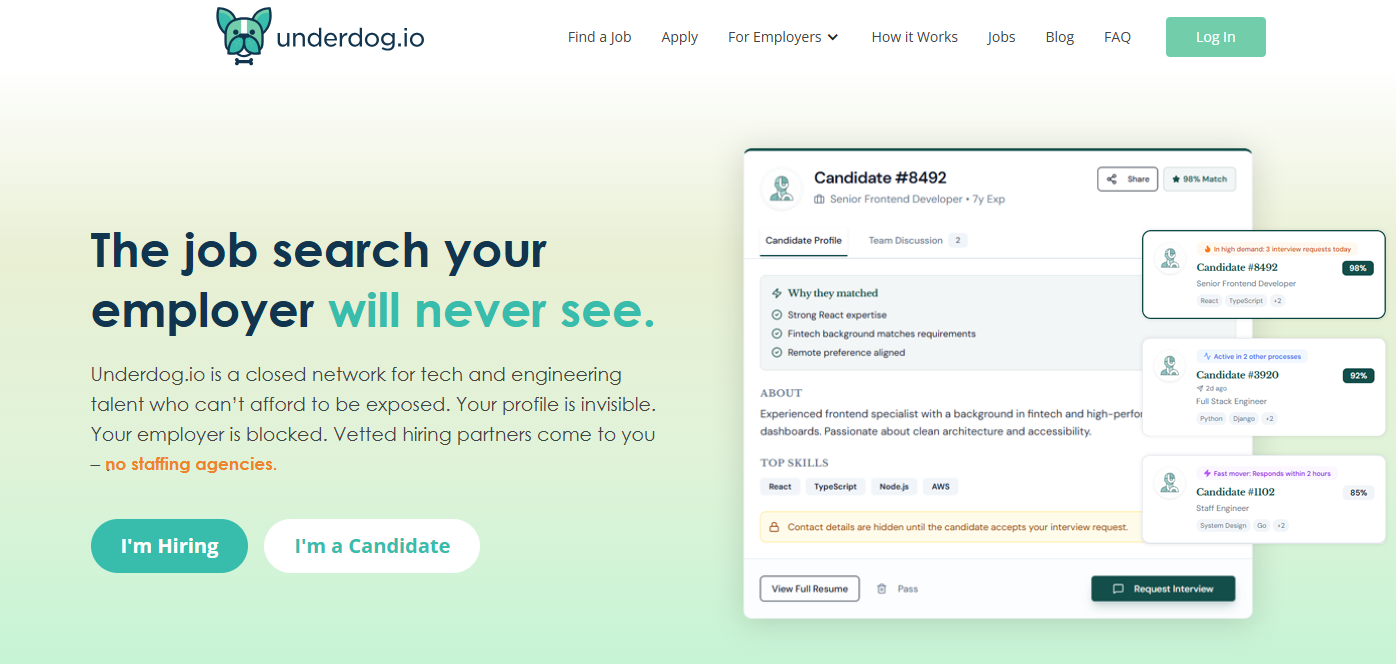
Why it’s great for startup jobs: This “reverse recruiting” approach is ideal for passive candidates. The platform accepts only a small percentage of applicants and rigorously screens companies too, ensuring high-quality matches for early-stage to Series B startups.
Pros:
- Human-curated matches, not algorithm-only
- Candidate anonymity until mutual interest
- Free for job seekers, with direct founder access
Cons:
- Highly selective acceptance process
- Limited to specific roles, geographies, and startup stages
Best for: Currently-employed professionals who want a low-effort, high-signal way to explore startup opportunities discreetly.
Website: underdog.io
6. Welcome to the Jungle
Welcome to the Jungle (which absorbed Otta) is a recommendation-driven platform that emphasizes deep company insights, culture, diversity stats, team structure, and compensation philosophy, alongside job listings for Series A through D startups.
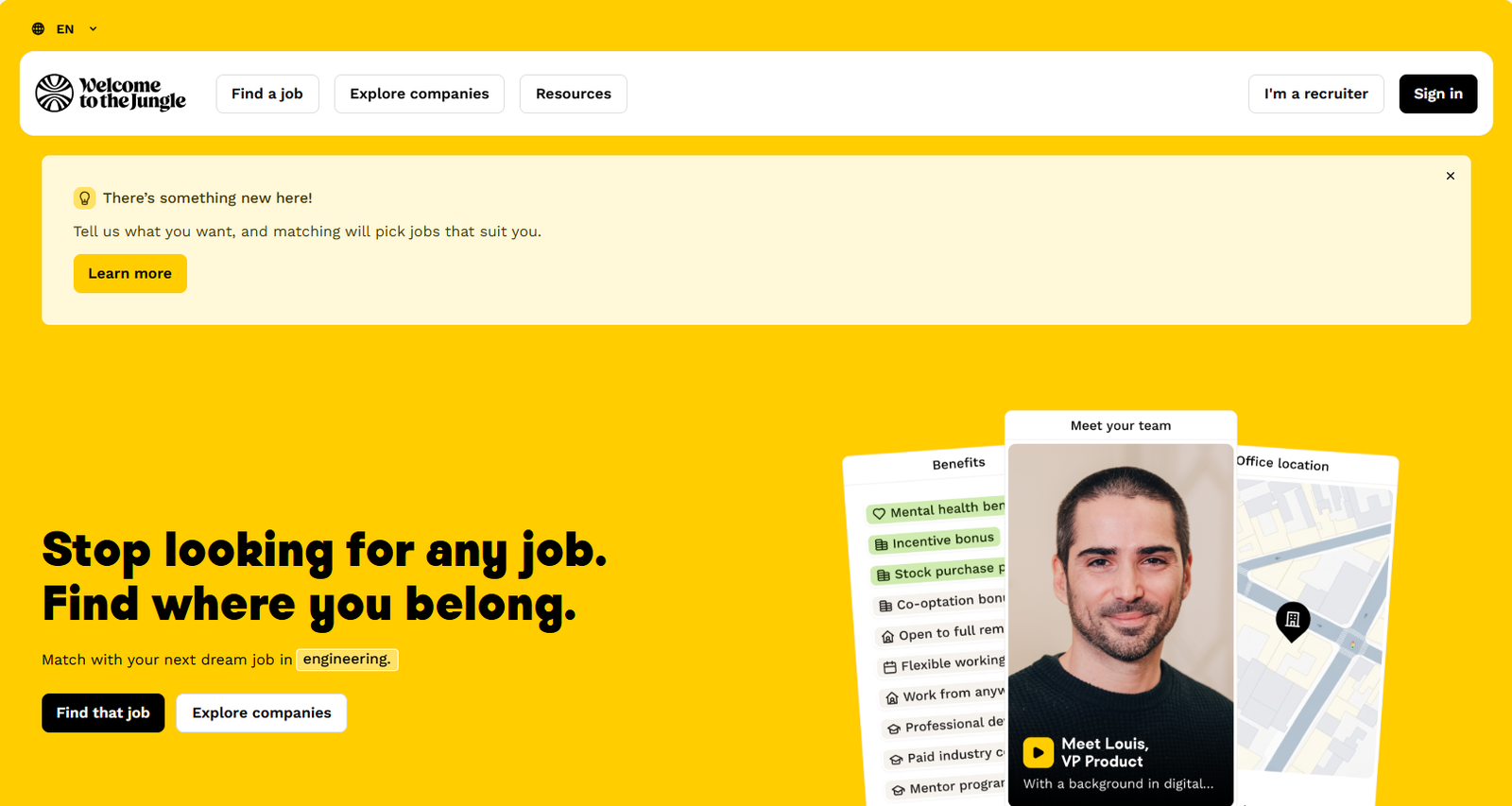
Why it’s great for startup jobs: Its matching algorithm improves with use, and detailed company profiles help you evaluate cultural fit before you even apply, not just after an offer.
Pros:
- Curated recommendations reduce noise
- In-depth company culture and diversity data
- Strong for discovering lesser-known Series A–D startups
Cons:
- Not exhaustive — won’t list every available role
- Match quality depends on profile detail
Best for: Candidates who prioritize cultural fit and want to research a company’s values before applying.
Website: us.welcometothejungle.com
7. Hired
Hired operates as a reverse marketplace: after a screening process, your profile becomes visible to vetted startup employers, who send interview requests often with salary and equity details included upfront.
Why it’s great for startup jobs: This model is especially powerful for in-demand roles like software engineering, product management, and data science at well-funded startups, saving you from sending dozens of cold applications.
Pros:
- Companies initiate contact, giving candidates leverage
- Upfront compensation transparency
- Saves significant time versus traditional applying
Cons:
- Requires passing a screening process to join
- Market coverage varies by city and role
Best for: Experienced tech professionals who want startups to compete for their attention rather than the reverse.
Website: hired.com
How to Choose the Right Startup Job Platform for You
With seven strong options, the key isn’t picking just one, it’s building a multi-channel strategy:
- For broad market research: Start with LinkedIn and Wellfound to understand salary benchmarks, in-demand skills, and which industries are actively hiring.
- For high-signal, targeted applications: Use Y Combinator’s platform if you want access to vetted, high-growth startups, or Welcome to the Jungle if cultural fit matters most.
- For a “set it and forget it” approach: Underdog.io and Hired bring opportunities to you, ideal for passive job seekers or busy professionals.
- For remote-first roles: Combine Wellfound’s remote filters with Built In’s remote job categories to maximize your reach.
Most successful startup job seekers maintain active profiles on two or three platforms rather than spreading themselves across all seven. Quality of engagement beats quantity of applications every time.
Comparison at a Glance
|
Platform |
Best For | Pricing |
Key Strength |
| Networking & recruiter outreach | Free (Premium optional) | Massive reach, 65M+ decision-makers | |
| Wellfound | Stage-specific filtering | Free | Salary & equity transparency |
| Y Combinator | High-growth, early-stage roles | Free | YC-vetted companies only |
| Built In | City-specific tech roles | Free | Local culture insights & salary data |
| Underdog.io | Passive candidates | Free | Curated, founder-direct matches |
| Welcome to the Jungle | Culture-fit focused search | Free | Deep company culture profiles |
| Hired | Senior tech talent | Free | Companies apply to you |
Final Thoughts
The startup hiring landscape in 2026 rewards job seekers who work smarter, not harder. Instead of mass-applying across every job board, pick two or three platforms that align with your career stage and goals. Whether that’s LinkedIn for visibility, Wellfound for transparency, or Underdog.io for a hands-off approach. Optimize your profile with startup-relevant keywords, stay consistent, and let these platforms do the heavy lifting of connecting you with the right opportunities.
Ready to land your next startup role?
Pick two platforms from this list, update your profile today, and start applying. Your next big career move could be just one application away.
FAQs
What is the best platform for finding a startup job in 2026?
LinkedIn for reach, Wellfound for startup-specific filtering, and Underdog.io or Hired for passive job seekers.
Are startup job platforms free to use?
Yes, all seven platforms are completely free for job seekers.
How is a startup job board different from a general job board?
Startup platforms filter by funding stage, culture, and offer salary/equity transparency that general boards lack.
Which platforms are best for remote startup jobs?
Wellfound, Built In, and LinkedIn all offer strong remote-specific filters.
Do I need a LinkedIn profile to find a startup job?
Not required, but “Open to Work” profiles get 37% more recruiter engagement.
How many job platforms should I use at once?
Two to three platforms matched to your career stage is ideal.
What should I look for in a startup job listing?
Salary and equity details, funding stage, team size, and remote work policy.