
We live in a world where the social media scroll never stops. Every second, more than 1,000 new posts appear across Instagram, TikTok, and X (Twitter). Brands feel constant pressure to post daily, if not multiple times a day to stay “relevant.” But here’s the twist: the most forward-thinking brands in 2025 are doing the opposite. They’re posting less… and growing more.
According to Hootsuite’s 2025 Social Media Benchmark Report, brands that reduced their posting frequency by 20% saw a 33% higher engagement rate per post. The trend signals a major shift from quantity-driven marketing to intentional, quality-first storytelling. This is what we call the social media detox era, not just for individuals but for brands, too.
In this blog, we’ll explore how posting less can actually strengthen your reach, deepen audience loyalty, and create more authentic brand growth.
What Is a Social Media Digital Detox?
A social media digital detox isn’t just about disappearing from the internet. It’s about creating space for clarity. For individuals, it means taking a break to reduce anxiety and regain mental focus. For brands, it’s a strategic pause to reset their content direction, reassess audience needs, and eliminate digital noise.
Think of it as decluttering your brand’s online presence. Instead of spamming multiple posts that get buried in algorithms, a detox allows you to focus on content that educates, inspires, or truly adds value.
Digital minimalism isn’t about doing less. It’s about doing what matters most. In 2026, that’s the core of an effective social media strategy.
Why Are Consumers Logging Off?
The global audience isn’t just scrolling les. They’re consciously stepping back. According to a Statista 2025 report, over 38% of Gen Z and Millennials plan regular social media breaks to manage mental health and screen fatigue.
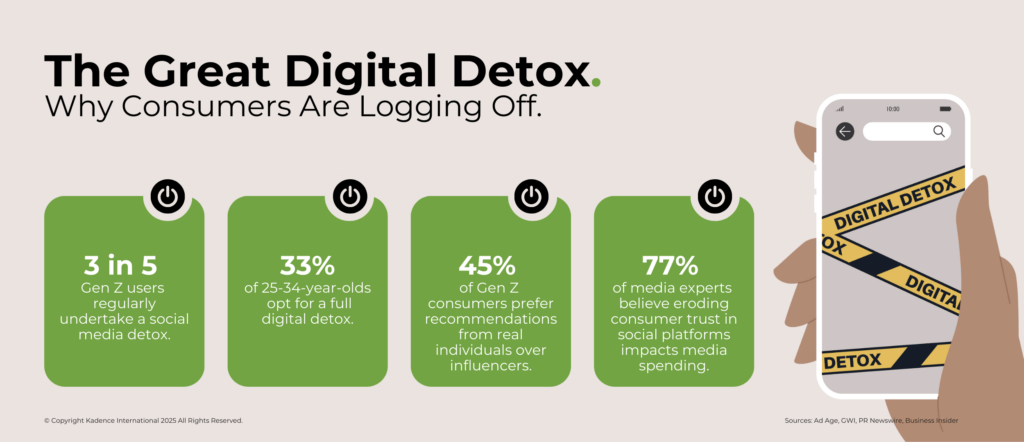
The message is clear: users crave authenticity, balance, and meaning over endless digital noise. Let’s unpack the psychology behind this shift.
What Does This Mean for Brands?
When users detox, brands can’t just push harder. They need to connect smarter. Overposting or being everywhere at once can dilute your message and exhaust your audience.
Instead, brands must focus on:
- Quality over frequency: Crafting fewer but high-impact posts.
- Storytelling over selling: Sharing experiences, not promotions.
- Engagement over exposure: Prioritizing real conversations over vanity metrics.
In 2026, brands that align with mindful content creation build trust, loyalty, and long-term audience retention, the real markers of growth.
What the Social Media Detox Trend Means for Brand Marketing Strategies
A social media detox isn’t just a cultural shift. It’s a marketing strategy evolution. The algorithms on major platforms like Instagram and TikTok now favor meaningful engagement and watch time over post frequency.
Brands like Patagonia and Glossier have proven that strategic silence can amplify impact. They post when they have something valuable to say not because the calendar says “Monday.”
Bonus Tip:
Audit your posting frequency every quarter. Identify which posts actually drive conversations or conversions and trim the rest.
The Role of Market Research in Navigating the Detox Trend
Understanding audience behavior is more critical than ever. Market research helps brands recognize when their audience is experiencing content fatigue and what kind of storytelling still captures attention.
For example, Sprout Social’s 2025 Report found that 71% of users prefer brands that “post less but with more purpose.” By tracking analytics, sentiment analysis, and social listening data, brands can pinpoint what resonates and when to pause.
Key Point:
Data doesn’t lie. If engagement drops despite consistent posting, it’s time to detox, recalibrate, and re-strategize.
Understanding Social Media Detox Culture
Social media detox culture is rooted in mindfulness and authentic connection. People no longer want endless brand noise. They want content that feels human.
For businesses, this culture shift is a wake-up call to slow down, listen, and create with empathy. In 2026, successful brands act like communities not corporations.
Insight:
Detox culture is less about absence and more about presence being intentional with every post you make.
Why Are Social Media Detoxes Becoming Popular?
1. Mental Health Awareness
Constant scrolling has led to a rise in digital burnout. Studies from the American Psychological Association show that excessive social media use contributes to anxiety, comparison, and attention fatigue.
Users are prioritizing peace over pressure and detoxing to regain focus.
For brands: Empathetic marketing and mental wellness-driven campaigns are more impactful than ever.
2. Information Overload
The internet floods users with more content than their brains can process. Detoxing helps people reclaim attention and focus.
For brands: Simplify your messaging. Minimalist content design and clear copy help audiences breathe and remember you longer.
3. The Desire for Meaningful Connections
Today’s audiences crave genuine interactions, not endless ads. Many now prefer private communities, Discord servers, and niche groups over mainstream platforms.
For brands: Build small, tight-knit communities your own digital tribe.
4. Growing Distrust in Social Media Platforms
Data privacy breaches, misinformation, and algorithm manipulation have pushed people to rethink their digital habits.
For brands: Transparency builds trust. Openly share your brand values, data ethics, and real stories behind the screen.
How to Disengage and Detox
Detoxing doesn’t mean vanishing. It means redefining your digital rhythm. Here’s how brands can do it effectively:
Make a Plan
Start by assessing what you want from your online presence. Is it awareness, engagement, or conversions? Set a realistic posting schedule, maybe 3 meaningful posts a week instead of 7 shallow ones.
Recognize Your Triggers
If you’re posting out of pressure, pause. Track your engagement patterns and audience behavior. Are your posts getting less traction despite frequency? That’s your signal to slow down.
Limit or Delete Apps Temporarily
Many social managers schedule content but stay offline during non-working hours. Tools like Later or Buffer help maintain presence without constant scrolling.
Be Accountable
Have a content accountability partner or strategist who ensures your posts are purposeful not reactive.
Re-evaluate and Return
After a detox period, revisit your metrics. Did engagement or sentiment improve? Keep the balance between visibility and value.
7 Quick Ways to Detox from Social Media
- Schedule Quiet Weeks — Dedicate one week every quarter to post-free reflection and content planning.
- Unfollow the Noise — Remove irrelevant accounts to regain focus on your niche.
- Set Posting Limits — Cap daily posts and focus on engagement-driven formats.
- Use Analytics as a Guide — Track what resonates and drop what doesn’t.
- Reinvest in Long-Form Content — Blogs, newsletters, and podcasts build deeper trust.
- Engage with Purpose — Reply to comments meaningfully, not mechanically.
- Reignite Offline Creativity — Attend events, collaborate in person, and use those experiences for authentic storytelling.
The Benefits Of A Social Media Detox
Taking a break from constant posting isn’t losing visibility. It’s regaining control. A social media detox helps brands pause, rethink, and create more meaningful content that truly connects. Here’s why it’s worth it:
1. Better Engagement Per Post
Posting less often gives your audience time to breathe and actually engage. Each post feels more valuable, and engagement rates naturally rise when you post with purpose rather than pressure.
Tip: Focus on quality storytelling or question-based captions to spark real conversations.
2. Improved Creativity
When you stop rushing to fill your feed, your creative team gets time to think, experiment, and innovate. A detox lets you create content that’s thoughtful, fresh, and truly aligned with your brand.
3. Stronger Audience Connection
Less noise, more meaning. When every post feels intentional, followers see your brand as genuine rather than salesy, building long-term trust and emotional connection.
4. Clearer Insights
Too much posting can blur your analytics. Fewer posts mean you can better track what actually performs well and adjust your strategy based on real results, not guesswork.
5. Reduced Burnout
Social media never sleeps, but you should. A short detox helps creators and teams recharge mentally, preventing creative fatigue and maintaining consistent quality over time.
6. More Authentic Branding
Stepping back allows your brand to refocus on its why. You reconnect with your story and values instead of chasing trends, which helps you show up more authentically.
7. Long-Term Clarity
A detox helps you zoom out, evaluate what’s working, and design a smarter, more sustainable content plan that supports real growth not just vanity metrics.
Brand Example: Lush Cosmetics
In 2021, Lush Cosmetics made global headlines by quitting Instagram, Facebook, and TikTok platforms they said were “toxic for mental health.” While critics feared it would hurt sales, the opposite happened.
Their digital detox campaign strengthened brand authenticity and loyalty. Customers resonated with their stand for mental wellness, driving positive PR and stronger brand equity.
Lush’s success proves one thing stepping back strategically can sometimes be the boldest marketing move of all.
Final Thoughts: Embrace the Change
The social media landscape in 2026 is shifting from loud to meaningful, from constant to conscious. Brands that dare to slow down are not falling behind; they’re leading differently.
By focusing on connection over consistency and value over volume, you not only grow sustainably, you earn loyalty that algorithms can’t buy.
If your brand feels stuck in the posting race, maybe it’s time for a reset.
Let’s help you design a smarter, calmer, and more powerful content strategy.
DM us at Digibble to start your mindful growth journey with us!
FAQs
Does posting less hurt visibility?
Not if done strategically. The key is consistency and relevance not volume.
How often should a brand post in 2026?
Studies suggest 3–4 quality posts per week often outperform daily, low-value content.
What platforms benefit most from mindful posting?
LinkedIn, Instagram, and TikTok reward authentic storytelling and engagement over frequency.
Can small businesses afford to post less?
Absolutely. For small businesses, every post should drive connection or conversion not just fill a slot.
How do I measure if my brand needs a detox?
Falling engagement, fewer saves, and declining reach despite regular posting are key signs.
Should brands announce a detox publicly?
If aligned with your brand message, yes. Transparency builds trust and intrigue.
What’s the first step in mindful posting?
Audit your content. Ask: “Is this post helping or just adding noise?”