
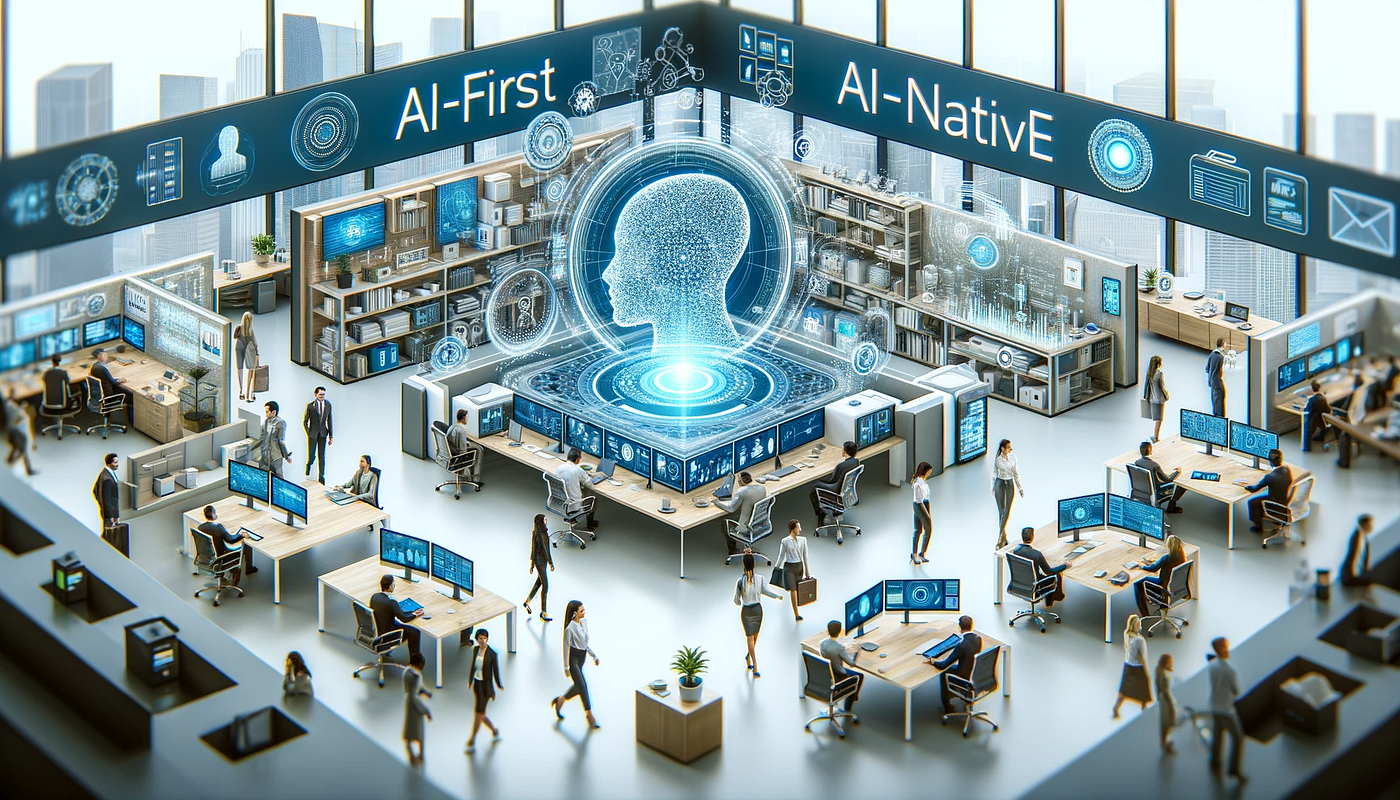
We are entering a business era no founder in history has experienced before: brands built not by large teams, but by large models. These “AI-native brands” are not just using AI as a tool, but as the foundational operating system behind their product development, marketing, customer experience, design, and operational workflows. For the first time, a single founder or a team of two can build, scale, and automate what once required departments of dozens.
The shift is so big that analysts predict 40% of new startups launched by 2030 will be AI-native, meaning AI will handle most of the business’s core functions from day one. We’ve already seen hints of this: creators launching automated newsletters, small businesses using AI agents as virtual employees, and solo founders generating entire product ecosystems without hiring a designer, developer, or writer.
This is not hype. It’s the new baseline.
AI-native brands operate faster, learn faster, and grow faster because they tap directly into the three superpowers of AI: automation, creativity, and infinite scalability. And while traditional companies are still adjusting, these new AI-powered businesses are sprinting ahead costing less, producing more, and serving customers in ways humans alone never could.
Below, we break down what makes these brands different, why they’re growing so quickly, and how founders everywhere from solopreneurs to startups can join the wave.
What Are AI-Native Brands?
AI-native brands are companies built from the ground up using AI as their main engine, not as an add-on. Every part of their business from ideation to execution is designed around intelligent systems, autonomous workflows, and automation-first thinking.
Instead of asking, “How can we add AI to our business?”
These brands ask, “How can we build a business entirely with AI?”
This means AI handles:
- product design and development
- branding, marketing, and content
- customer support and onboarding
- backend workflows and internal processes
- data analysis and decision-making
It’s not about replacing humans. It’s about removing friction, complexity, and slow operations and allowing founders to focus purely on vision and strategy.
Why AI-Native Brands Are Inevitable
Three global shifts are driving this movement:
1. Zero-Cost Creativity
AI removed the barrier between idea → execution. A founder can generate 100 product concepts in one hour, prototype visuals instantly, and test them digitally before spending a rupee on production. Creativity is no longer limited by budget.
2. Instant Execution
Content, emails, SEO-optimized blogs, video edits, landing pages, everything that used to take weeks now takes minutes. When speed becomes infinite, competition becomes irrelevant.
3. Infinite Personalization
AI lets brands create hyper-personalized content and products for every customer. Instead of broadcasting, they micro-cast and that leads to higher trust, higher sales, and higher retention.
AI-native brands scale because they are built for a world where attention spans are short, competition is intense, and buyers expect fast, personalized experiences.
AI-Driven Product Development: How Ideas Turn Into Products Automatically
One of the most disruptive shifts introduced by AI-native brands is automated product development. Previously, founders needed months of research, brainstorming, prototyping, and testing before they could validate even a simple idea. Today, AI compresses this cycle dramatically.
A founder can input a problem statement into an AI system, and within minutes receive:
- customer pain point analysis
- multiple product concepts
- name + branding ideas
- user journey maps
- pricing models
- UX/UI wireframes
- competitor gap insights
This is not theoretical. It’s already happening. Some solopreneurs use AI to generate 10-20 product ideas per week and test them instantly using AI-driven market simulations.
This speed gives AI-native brands a superpower: precision + velocity. They don’t guess what the market wants, they test, learn, and pivot in real time.
How AI-Native Brands Build Products Faster Than Traditional Companies
AI-native companies don’t rely on assumptions; they rely on simulations and data. Here’s what the AI-powered product creation cycle looks like:
Step 1: AI-Generated Market Research
Instead of traditional surveys, AI analyzes billions of data points to forecast trends, customer behavior, competitor gaps, and future demand.
Step 2: AI-Generated Prototyping
Designs, mockups, packaging, user flows, and feature lists are created instantly using AI design models.
Step 3: AI-Generated Production Pipelines
Even manufacturers in China are using AI to convert sketches into production-ready files automatically.
Step 4: AI-Generated Content & Marketing
AI creates ads, videos, email sequences, landing pages, and social content in minutes, not weeks.
This speed makes AI-native brands incredibly agile. If one idea fails, founders can pivot in 24 hours. Traditional brands need 6 months.
The Rise of AI-Powered Micro-Teams: Why Fewer People Now Build Bigger Companies
A decade ago, a startup with five employees could barely keep up with operations, marketing, and sales. Today, a team of five can outperform a company of fifty.
AI handles repetitive tasks at scale:
- content creation
- video editing
- design
- customer support
- analytics
- email sequences
- data reporting
- SEO
- project management
This means human teams can be strategic instead of operational. AI-native brands operate with extremely low overhead, high speed, and very few bottlenecks. Many successful startups today function with “AI staff, a network of agents executing tasks around the clock.
The future is clear: teams will grow by capability, not by headcount.
The New Era of Autonomous Customer Experiences
AI-native brands deliver customer experiences that feel personal, intuitive, and frictionless.
Their customer journey often includes:
- AI onboarding flows that explain products clearly
- AI agents offering 24/7 real-time support
- personalized product recommendations
- adaptive learning based on user behavior
- automated retention workflows
Consumers don’t want slow responses anymore. They don’t want to wait for support emails. They want answers now and AI-native brands deliver that effortlessly.
This leads to higher retention, lower churn, and deeper loyalty. When customer experience becomes automated, the brand feels consistently attentive even with a micro-team running it.
The AI Stack Behind Fast-Scaling AI-Native Brands
AI-native companies typically run on an optimized stack like:
1. Core AI Brain
ChatGPT / Claude / Perplexity for strategy, writing, planning, and problem-solving.
2. AI Design Engine
Midjourney / Ideogram / Figma AI for branding, visuals, UI, packaging.
3. AI Video & Audio Creators
Runway, Pika Labs, Opus Clip, ElevenLabs for automated content creation.
4. AI Website & Funnel Builders
Durable AI, Webflow AI, Framer AI for instant launch.
5. AI CRM & Automation
HubSpot AI, GoHighLevel AI, Zapier AI for follow-ups and customer journeys.
6. AI Analytics
Predictive forecasting tools that simulate buyer behavior and improve decision-making.
This stack allows one founder to run what used to be a full-fledged digital agency.
Ethical Branding in the Age of Full Automation
As automation expands, ethics become a competitive advantage. AI-native brands must navigate questions like:
- How transparent should AI usage be?
- How do you ensure AI doesn’t generate biased outputs?
- What decisions require human oversight?
Brands that hide behind automation risk losing trust. But those that openly communicate how AI supports their business create authenticity and credibility.
The best AI-native brands build “human-in-the-loop” systems, ensuring people guide decisions while AI handles scale. Transparency becomes part of the brand story and consumers reward honesty.
Why Consumers Buy from AI-Native Brands
You might think customers prefer human-led brands but research shows otherwise.
According to a 2025 Deloitte study:
- 71% of consumers buy faster when recommendations are AI-personalized
- 63% prefer chat-based automated customer service over phone calls
- 58% feel AI-generated product suggestions are more accurate
Consumers don’t care who made the content.
They care whether the brand solves their problem and saves their time.
AI-native brands can do both at scale.
Case Studies: Real Brands Leading the AI-Native Shift
Before diving in, it’s important to understand that AI-native brands aren’t just theoretical. They already exist and they’re scaling at unprecedented speed. These real-world examples show what’s possible when founders use AI not as a tool, but as the foundation of their entire company.
Case Study 1: Humane AI Pin: A Wearable Interface Built on AI
The Humane AI Pin represents a radical shift in the device world: a wearable powered almost entirely by AI instead of apps. Unlike smartphones that rely on manual input, the AI Pin uses voice commands, gesture control, and a laser projector to deliver real-time output, translation, recommendations, and data retrieval, all powered by an AI assistant.
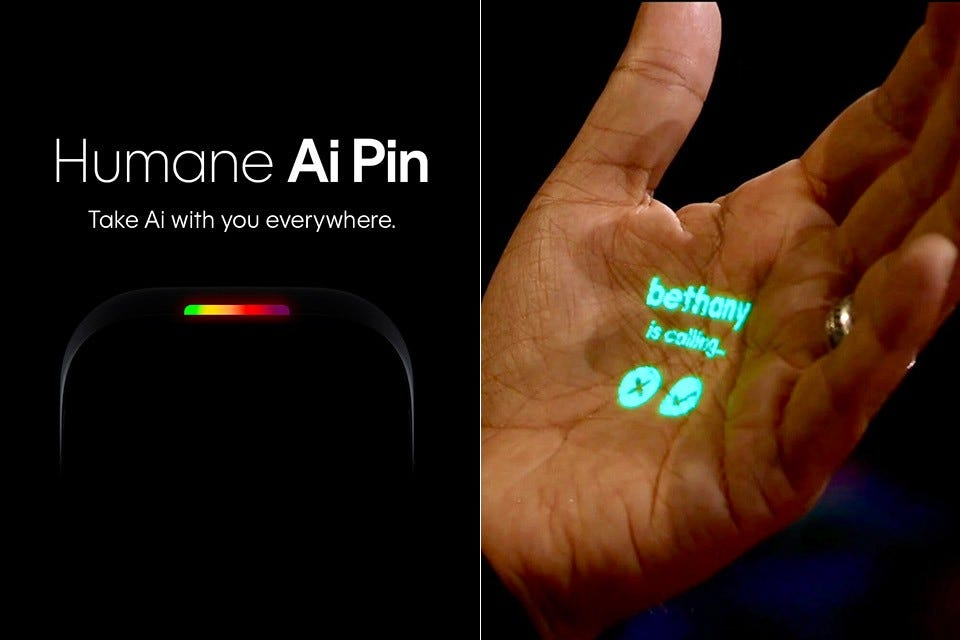
The product was built through deeply AI-integrated design cycles. Instead of traditional prototyping, the team used AI-driven simulations to test interactions, voice models, and UX decisions. This accelerated development and produced a device optimized for natural behavior, not screen-based habits.
The AI Pin shows how future AI-native brands will build products fast, responsive, and deeply integrated into daily life.
Case Study 2: Replit: The AI-Powered Software Factory
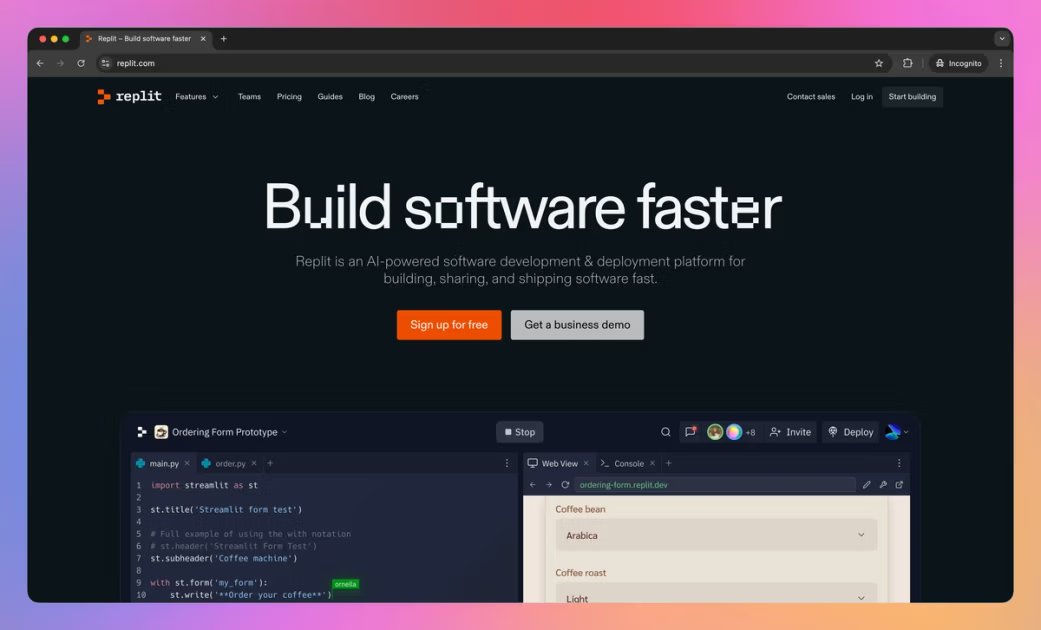
Replit, founded by Amjad Masad, functions like an AI-native coding environment where anyone can build and deploy software using AI as a real-time coding partner. Replit’s AI coding assistant, “Ghostwriter,” can generate code, solve errors, restructure files, build full-stack applications, and even deploy them instantly.
Replit runs like an AI-native brand by automating:
- debugging
- testing
- code generation
- deployment
- optimization
This drastically lowers barriers for new developers and accelerates production for experts. Replit showcases what the future looks like when AI becomes the engine behind technical creation. It’s not replacing developers it’s multiplying their capabilities.
The Future of Work in AI-Native Companies
AI-native businesses fundamentally change how work gets done. Instead of long meetings, heavy documentation, or scattered workflows, these companies rely on integrated AI systems that coordinate tasks, track progress, and provide insights. Employees collaborate with AI tools as coworkers rather than assistants.
This reduces decision fatigue, speeds up execution, and makes work more creative. People spend less time gathering information and more time solving real problems.
The result? Higher productivity, fewer bottlenecks, and more meaningful output.
AI as Your First Employee: Why Solo Founders Are the New Competition
Today’s solo founder is no longer alone they operate with a “team” of AI agents capable of designing, writing, editing, coding, scheduling, analyzing, and automating processes.
This dramatically changes the entrepreneurial landscape:
- barriers to entry drop
- experimentation becomes cheaper
- distribution becomes faster
- brand building becomes easier
Solo founders can now achieve what once required capital, staff, and infrastructure. This marks the beginning of a new era: the one-person AI-powered startup.
AI-Native Marketing: How Brands Grow Without Traditional Playbooks
AI-native brands aren’t using old-school marketing strategies. Instead, they use AI to:
- analyze audience behavior
- predict viral content patterns
- craft personalized campaigns
- automate distribution
- optimize in real time
Marketing becomes a system not an experiment. It adapts instantly, responds intelligently, and scales without requiring massive ad budgets.
The result? Faster visibility, higher engagement, and lower acquisition costs.
The Challenges AI-Native Brands Face (And How They’re Solved)
AI-native brands are powerful, but not perfect. Here are real issues founders face:
1. Brand Authenticity Concerns
Consumers want transparency. Brands need to communicate how AI is used without hiding it.
2. AI Content Saturation
As AI-generated content increases, quality becomes the differentiator. This is why the brands that win will be the ones that master human-guided AI creativity.
3. Ethics and Data Security
Brands must ensure compliance with privacy laws and prevent biased outputs.
4. Platform Dependency
AI-native brands must diversify AI tools to avoid shutdown risks.
Despite these challenges, AI-native companies still grow exponentially because their operating costs are low and experimentation speed is unmatched.
Final Thoughts: Why This Shift Matters More Than Ever
We are entering a world where companies won’t just use AI, they’ll be built by it. The founders who embrace this shift now will become the category leaders of tomorrow. AI-native brands operate faster, cheaper, and smarter because they automate friction instead of working around it.
Whether you’re a solo creator, a small business, or a growing startup, the message is clear:
AI won’t replace you. But founders who use AI will outperform those who don’t.
If you want strategic help, AI-driven content, or growth systems built for the new era, Digibble can help you get there faster, smarter, and ahead of everyone else.
FAQs
Are AI-native brands replacing human-led companies?
No. AI-native brands reduce grunt work, not human creativity. Humans remain the visionaries; AI executes the vision.
Do consumers trust AI-generated products?
Yes! As long as the quality is high. Studies show personalization increases trust, even if AI is involved.
Can a complete beginner launch an AI-native brand?
Absolutely. Most AI tools require no technical background.
How expensive is it to build an AI-native brand?
Many founders launch with less than $300 using free or low-cost AI tools.
What business models work best for AI-native brands?
Digital products, SaaS micro-tools, niche e-commerce, personal brands, publishing, and coaching.
Will AI replace marketers and designers?
It will replace repetitive tasks, not strategy, taste, or vision.
How do AI-native brands scale so fast?
Because operations, content, customer service, and feedback loops are automated.
Is this trend temporary?
No. AI-native brands are the next stage of the internet just like e-commerce was a decade ago.