
In 2026, LinkedIn is no longer “just a professional social network.” It has evolved into the modern-day accelerator. A platform where founders can validate ideas, attract talent, secure early customers, build authority, and get investor attention without cold pitching. Data backs this shift: LinkedIn reports that over 80% of B2B leads generated on social media come from LinkedIn, and founder-led companies grow their brand visibility 2.5x faster than companies relying only on corporate pages. More importantly, LinkedIn’s algorithm increasingly favors individual creators over brands, meaning a single founder can outperform entire marketing teams through consistent personal storytelling.
When you look closely, LinkedIn functions exactly like a startup accelerator, but without requiring equity, applications, or acceptance letters. Accelerators give founders mentorship, visibility, network access, idea validation, and distribution. LinkedIn gives all of this too, except it’s permissionless and scalable. A single high-value post can reach 50,000–500,000 people organically, without spending a dollar on ads. A well-built profile can operate as a landing page. A strong content system becomes a distribution engine. And a well-engaged community becomes an always-on focus group offering real-time market insight.
The founders winning on LinkedIn in 2025 aren’t just posting content. They’re treating LinkedIn like a core business function. They build systems, test ideas publicly, use feedback loops, and leverage audience-building as a competitive advantage. In a world where attention is the new currency, LinkedIn is the accelerator founders don’t need permission to join.
What Makes LinkedIn the Modern Startup Accelerator?
Traditional accelerators offer resources to help founders grow faster: mentorship, visibility, funding opportunities, and access to a community of innovators. LinkedIn mirrors this experience, except it operates at global scale, 24/7, and at zero cost. Instead of waiting for Y Combinator or Techstars to give validation, founders can validate ideas directly with the market through content. Instead of preparing pitch decks, they can attract investors through consistent narrative-building. Instead of joining mentorship cohorts, they can learn from top operators posting daily insights.
LinkedIn has turned the entire world into one massive accelerator where ideas collide with opportunities. This is especially true because LinkedIn’s algorithm prioritizes relationship-driven content. When founders share learnings, failures, behind-the-scenes stories, or problem-solving frameworks, engagement comes naturally and engagement is distribution. In this sense, LinkedIn rewards founders not for being perfect, but for being useful, relatable, and consistent.
The Rise of Founder-Led Growth on LinkedIn
Founder-led brands are outperforming corporate brands across every industry. Audiences want access to people, not companies. They trust faces more than logos. That’s why founder-led content earns 5–10x more engagement than brand accounts. When the founder becomes a visible operator, everything accelerates: trust, attention, network, demand.
This shift has given rise to a new growth model, Founder-Led Growth. Where leverage comes from the founder’s voice, not the marketing budget. On LinkedIn, a single well-written post carries more influence than thousands of dollars spent on traditional ads. Why? Because stories from real operators outperform polished brand messaging. This is why LinkedIn behaves like an accelerator: it amplifies founders who are willing to be visible, vulnerable, and valuable.
Why LinkedIn Outperforms Traditional Accelerators for Early-Stage Founders
Traditional accelerators have limited seats, strict selection criteria, and narrow scope. LinkedIn offers unlimited opportunity, unlimited reach, and unlimited iterations. Early-stage founders benefit the most because LinkedIn accelerates what young companies need most:
Early signal detection — which ideas people resonate with
Fast iteration — real audience feedback
Distribution — without paying for ads
Credibility — built through consistent sharing
Networking — with operators, experts, and investors
Demand generation — built through authority
What takes accelerators months, LinkedIn can deliver in weeks if the founder shows up consistently.
Why Every Founder Should Treat LinkedIn Like a Startup Accelerator
Startups don’t succeed because they have perfect products. They succeed because they find distribution. LinkedIn is the distribution accelerator hiding in plain sight. When treated seriously like a 12-week accelerator program, founders can build momentum quickly, especially in:
- Demand generation
- Product validation
- Audience building
- Hiring
- Investor visibility
- Brand positioning
- Thought leadership
Investors today actively scan LinkedIn to identify emerging founders. Recruiters scout founders based on their insights. Clients make decisions based on your posts, not your website. Your content is your pitch deck. Your profile is your landing page. Your audience is your accelerator batch.
This is the new game.
Turning Your LinkedIn Profile Into a Startup Landing Page
Your profile is the first touchpoint in your accelerator journey. Most founders treat it like a digital CV, but in 2026, it should operate like a startup homepage. That means a profile should:
Tell a story — Who you are, what problem you solve, and why it matters
Show proof — Key metrics, results, credibility signals
Offer value — Insights, frameworks, resources
Drive action — A clear CTA in your headline or “About” section
LinkedIn profiles with storytelling-based “About” sections generate 3x more profile dwell time, which boosts visibility in search and algorithmic recommendations. A founder’s profile isn’t just about career history anymore, it’s about brand positioning.
Posting Like a Founder, Not a Marketer
Founders who win on LinkedIn don’t post “marketing content.” They share:
- Build-in-public updates
- Lessons from failures
- Customer insights
- Founder psychology
- Market observations
- Frameworks that save time
- Stories from the trenches
This is the kind of content accelerators encourage founders to develop internally but on LinkedIn, you publish it publicly and gain traction instantly.
Authenticity beats polish every time. 2026’s highest-performing LinkedIn posts often come from founders sharing unscripted moments: revenue transparency, product pivots, early setbacks, customer wins, or humbling leadership lessons.
The LinkedIn Feedback Loop: Your Always-On Market Sensor
Accelerators give founders mentors, but LinkedIn gives something more powerful: live data. The platform acts like a continuous feedback system where you can instantly test ideas, messaging, customer pain points, and value propositions. Comments reveal what resonates. DMs reveal demand. Shares reveal virality. Audience growth reveals market alignment.
When a founder adopts this mindset, LinkedIn stops being “a place to post” and becomes “a place to learn.” Every post is a micro-experiment. Every insight is market research. Every conversation is a data point. This is why treating LinkedIn like a startup accelerator creates exponential long-term value.
Why LinkedIn Builds Founder Credibility Faster Than Any Other Platform
Credibility is a founder’s strongest currency, and LinkedIn accelerates credibility at unprecedented speed. When a founder shares consistent insights, people assume expertise. When the founder documents progress, people assume competence. When the founder communicates a vision, people assume leadership. This perception-building effect multiplies as your network grows.
Studies show that thought leadership content increases buyer trust by 70%. Meanwhile, 61% of decision-makers say they’re more likely to consider a business if the founder posts regularly. This is the accelerator effect. Influence created through repetition, value, and visibility.
Case Study 1: How Alex Hormozi Turned LinkedIn Into a Growth Accelerator

Before diving into the tactical framework, it’s important to understand how LinkedIn acts as a real-world accelerator for founders. One of the strongest examples is Alex Hormozi, whose authority and distribution exploded without paid ads.
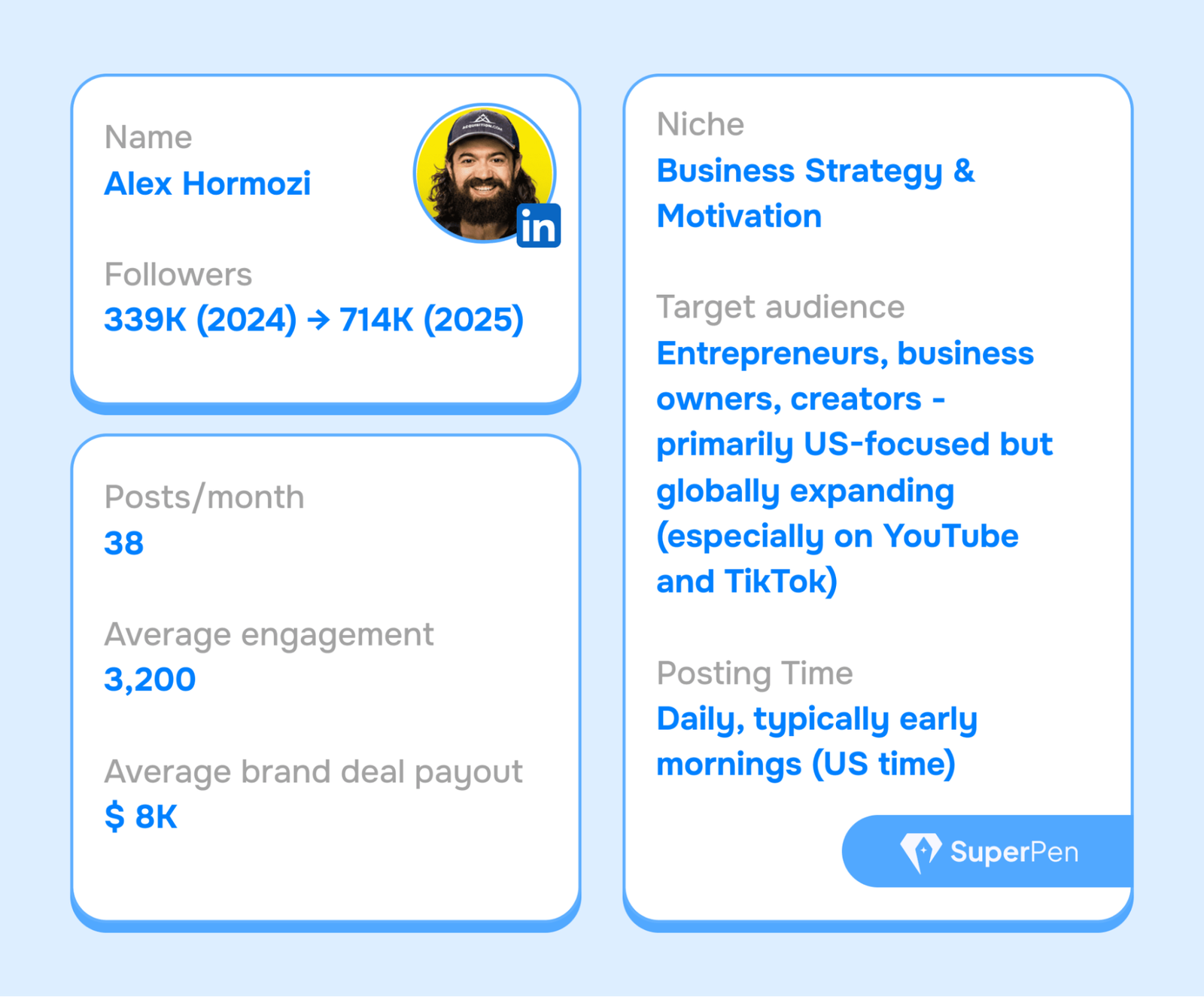
Hormozi used LinkedIn as a high-leverage communication platform. He posted frameworks, mistakes, and real numbers. His content built credibility faster than any PR campaign could. Within a year of consistent posting, his audience turned into a pipeline of founders, partners, and customers. No accelerator gave him that leverage, LinkedIn did.
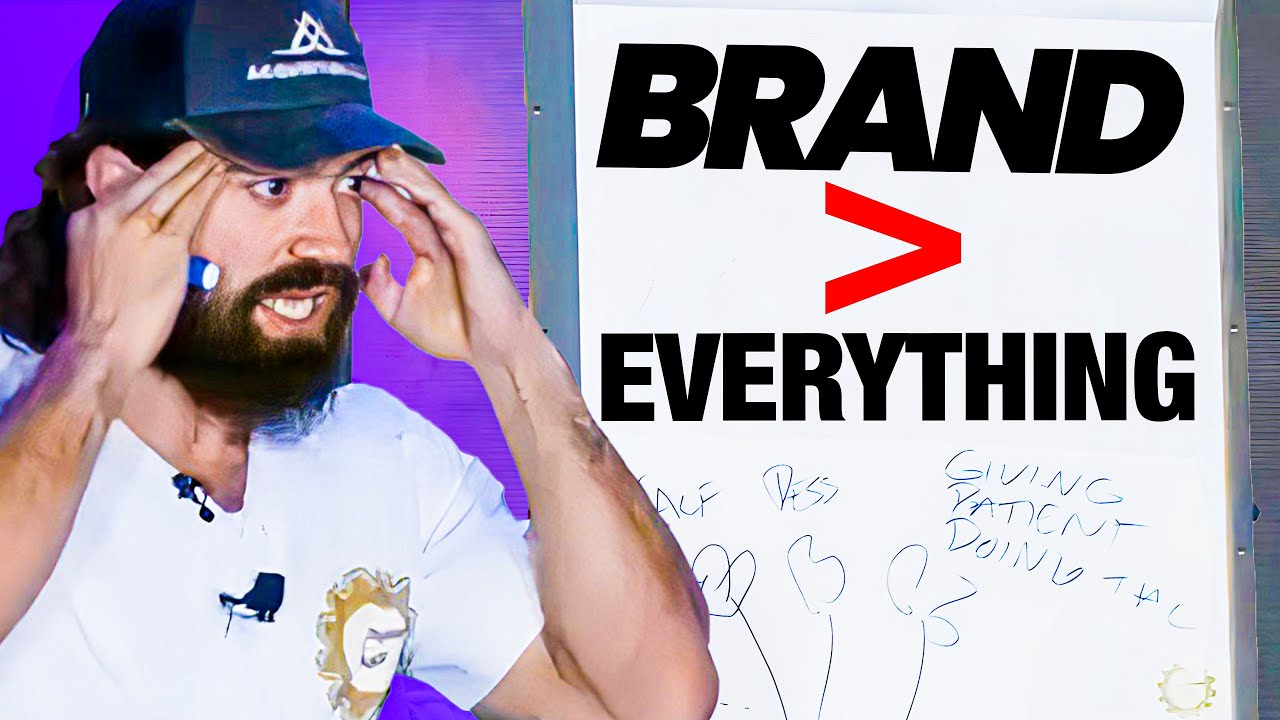
His posts acted as mentorship, his audience became distribution, and his insights turned into a global brand. It’s a prime example of how founders can use LinkedIn to scale authority without gatekeepers.
Case Study 2: Baraja Co-Founder Scaling Through Founder-Led Content
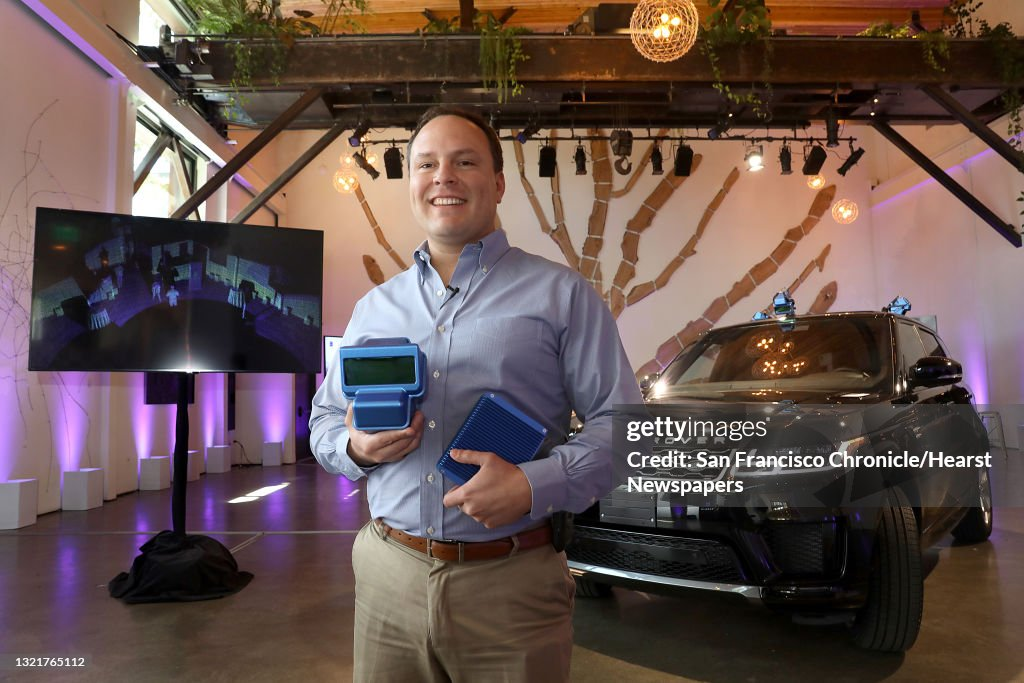
Another example is Federico Collarte, co-founder of Baraja (an autonomous vehicle lidar company). Instead of relying on PR agencies or accelerators, he shared engineering learnings and product breakthroughs directly on LinkedIn.

Investors, engineers, and industry leaders found the posts valuable and visibility skyrocketed. His insights led to investor conversations, partnerships, and talent acquisition. This is what accelerator-style distribution looks like, except he built it himself. LinkedIn rewards depth and expertise, and Federico leaned into it.
How Founders Can Use LinkedIn as a Daily Accelerator (The 2025 Blueprint)
To turn LinkedIn into your accelerator, think in systems, not posts. Set clear weekly goals:
- Publish three high-value posts
- Engage with 10–15 relevant voices
- Share one personal learning
- DM five ideal collaborators or customers
- Test one new content format
Within 60–90 days, founders begin to see the “accelerator effect”: more inbound leads, more profile views, more authority, and more strategic opportunities. Most founders underestimate how powerful LinkedIn becomes once consistency compounds.
What Most Founders Get Wrong About LinkedIn
Founders struggle because they treat LinkedIn like a tactic, not a strategic advantage. They post when they feel like it, write corporate content, or outsource their voice to agencies. This breaks trust and kills momentum. What LinkedIn demands is what accelerators also demand: commitment, clarity, and consistency. Founders who succeed build habits, systems, and stories not random posts.
The Future: LinkedIn as the Default Founder Accelerator
As attention becomes more valuable and acquisition costs rise, founders will increasingly rely on platforms where authenticity and expertise win. LinkedIn is already shaping itself into a global founder network where insight is currency. In the coming years, we’ll see more investors scouting talent on LinkedIn, more founders building in public, and more teams forming through conversations started in the comment section.
LinkedIn will become the default accelerator because it democratizes opportunity.
Final Thoughts: LinkedIn Is the Accelerator Founders No Longer Need to Apply For
In a world where attention decides whether a startup thrives or fails, LinkedIn has become the highest-leverage platform for founders. It acts as an accelerator, a distribution engine, a network builder, a credibility machine, and a learning environment, all at once.
The founders who treat LinkedIn seriously in 2026 will outperform those who treat it casually, because visibility compounds just like revenue does. Your future customers, investors, partners, and collaborators are already on LinkedIn.
The question is: Are you showing up like a founder who wants to be found?
If you’re ready to build a founder-led brand that attracts clients, opportunities, and authority. Digibble can help you grow faster, stay consistent, and turn your ideas into influence.
Let’s scale your voice, your brand, and your business together.
FAQs
Why should founders use LinkedIn like an accelerator?
Because it provides visibility, distribution, mentorship, networking, and idea validation. The key functions of accelerators without gatekeepers.
How often should founders post on LinkedIn?
Ideally 3–5 times per week, with consistent engagement, for compounding visibility.
Does LinkedIn help with fundraising?
Yes. Investors actively track founders on LinkedIn and often reach out after seeing consistent insight-driven content.
What type of content performs best for founders?
Stories, frameworks, lessons, behind-the-scenes updates, and market insights.
Can LinkedIn replace a startup accelerator?
Not entirely, but it can replicate many of the benefits accelerators provide without equity loss.
Does LinkedIn work for early-stage founders?
Absolutely. It’s the fastest way to validate ideas, attract early users, and build credibility.
Should founders use personal branding agencies?
Only if they keep their authentic voice. LinkedIn rewards human storytelling, not corporate messaging.
How long does it take to grow on LinkedIn?
Most founders start seeing results within 60–90 days of consistent posting and engagement.